Archetype Classifications
Read time:
7 min
Client:
Class Project
Industry:
Data Analysis
Starting point
Pedestrian crossings are a critical point of interaction between people, vehicles, and the built environment. Yet, individual behaviors at crosswalks can vary widely, from assertive crossings to cautious hesitations, and these variations can directly influence traffic flow, safety, and overall urban mobility. Traditional traffic models often focus on vehicles, treating pedestrian behavior as uniform or predictable, which overlooks the nuance in real-world human decision-making.
Our team sought to better understand these patterns to inform urban design decisions and inspire more human-centered mobility systems. By observing real-world intersections, we aimed to uncover how pedestrians prioritize safety, efficiency, and social awareness in context. This includes understanding:
How people negotiate right-of-way with other pedestrians and vehicles
The influence of group dynamics, distractions, or environmental cues on crossing behavior
Patterns of risk-taking vs. caution in different traffic or environmental conditions
How subtle behaviors reflect decision-making strategies
By studying these interactions in detail, we could translate behavioral insights into archetypes that capture the diversity of pedestrian behavior. These archetypes can serve as actionable inputs for urban planners, traffic engineers, and designers, helping to create safer, more efficient, and human-centered crosswalk experiences.
Problem solving
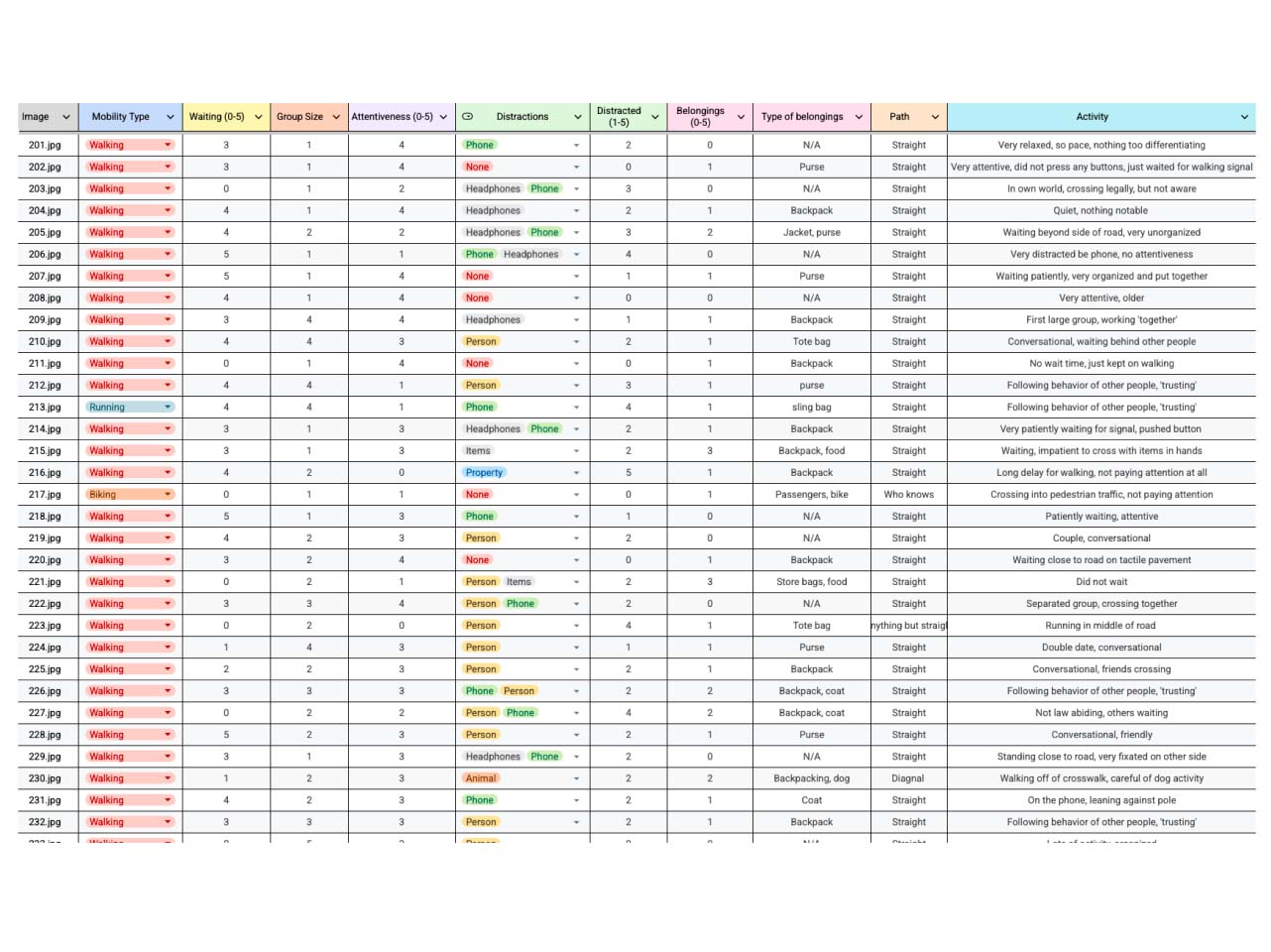
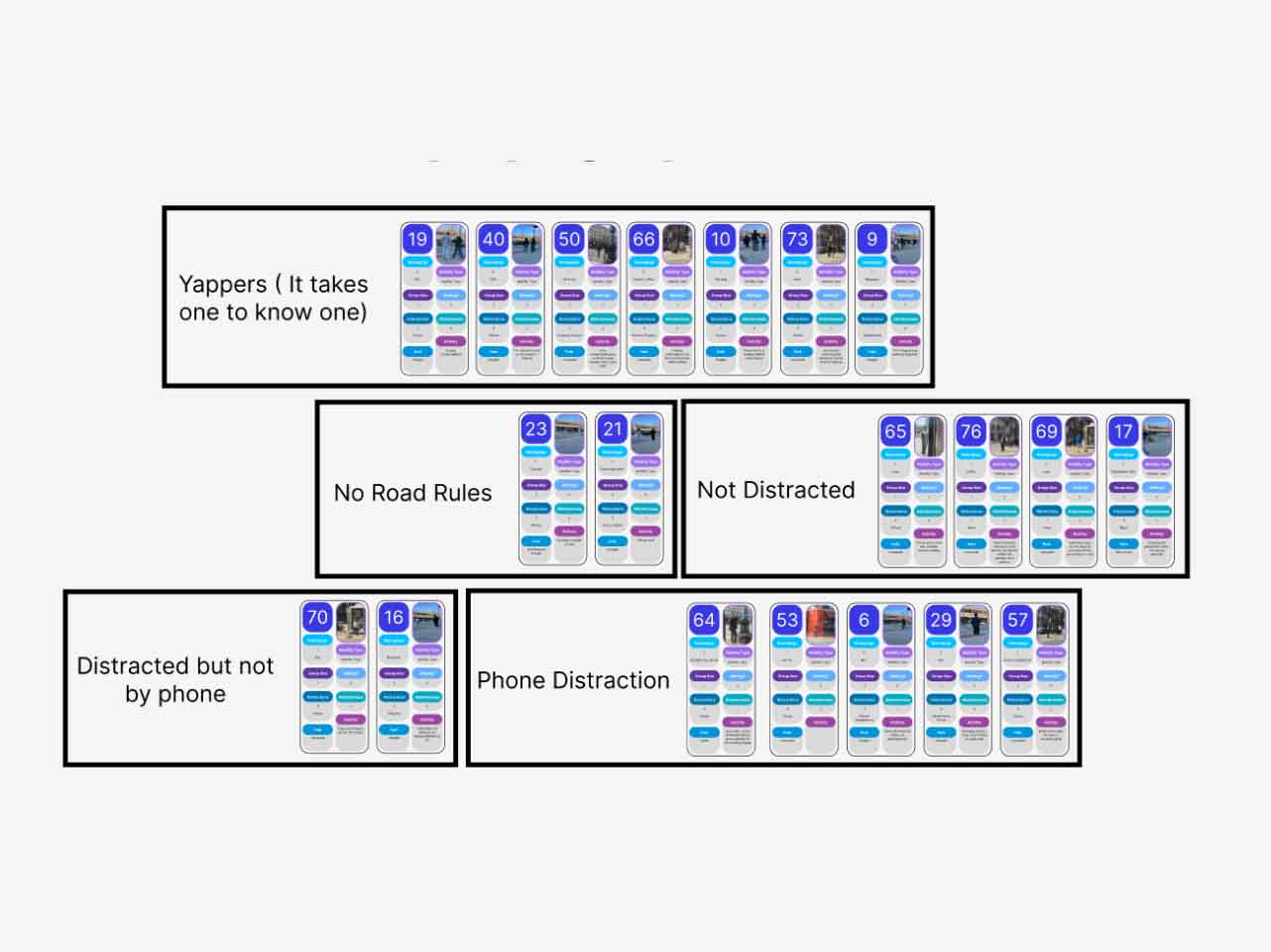
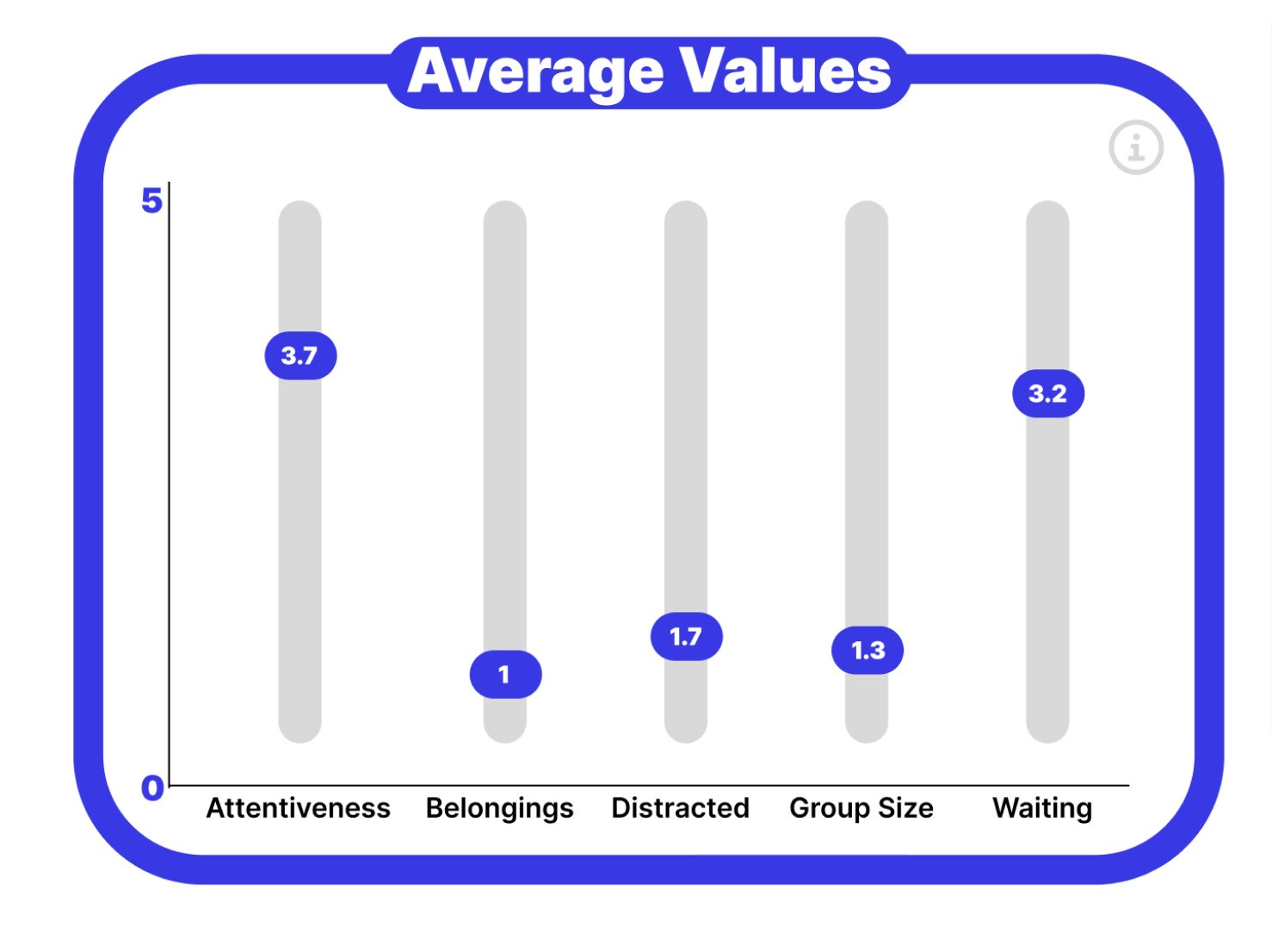
We conducted field observations at multiple urban intersections, systematically documenting variables such as mobility type, group size, attentiveness, distractions, and crossing timing. This allowed us to capture not just whether pedestrians crossed safely, but how they made decisions in real-world contexts.
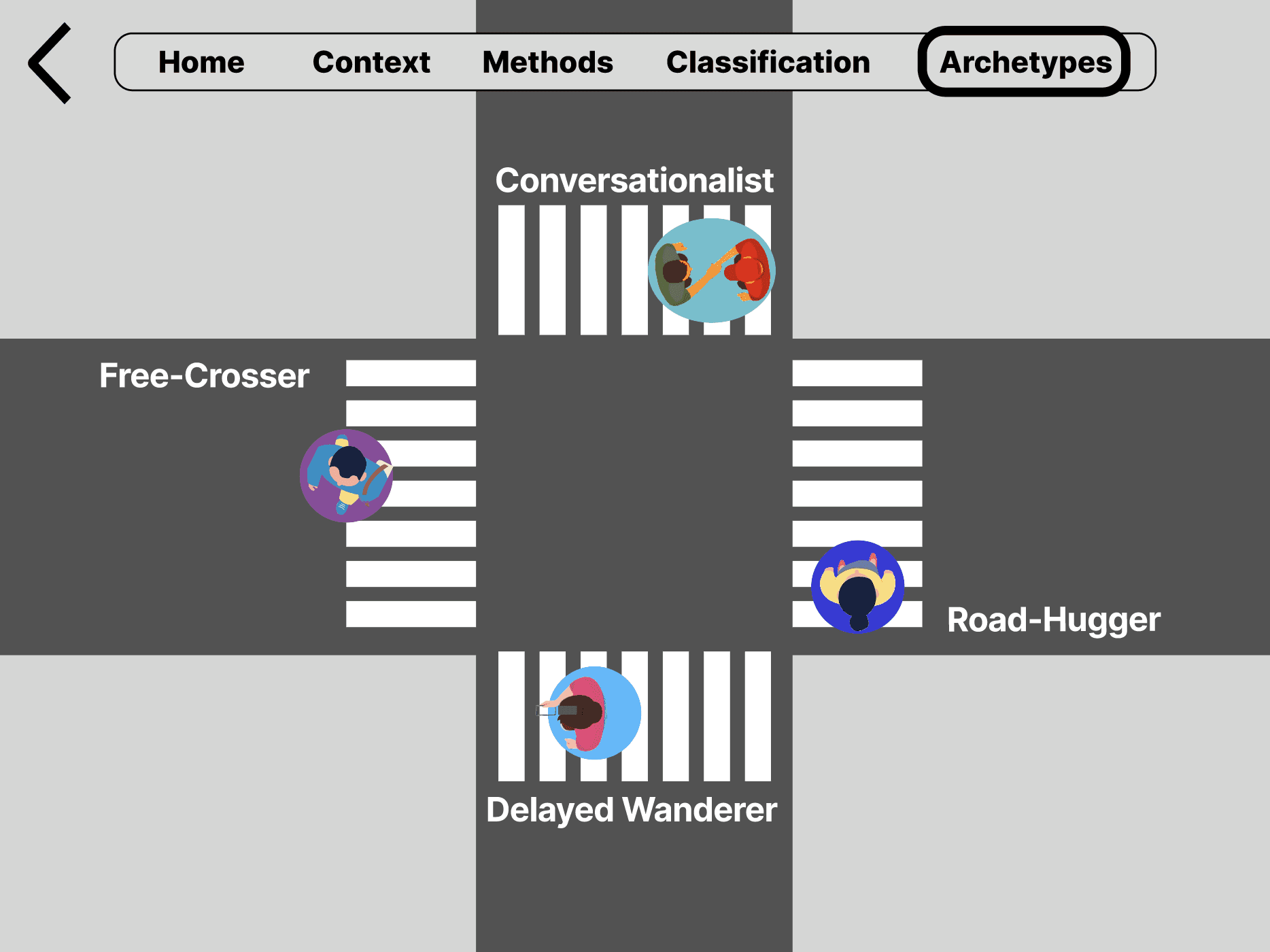
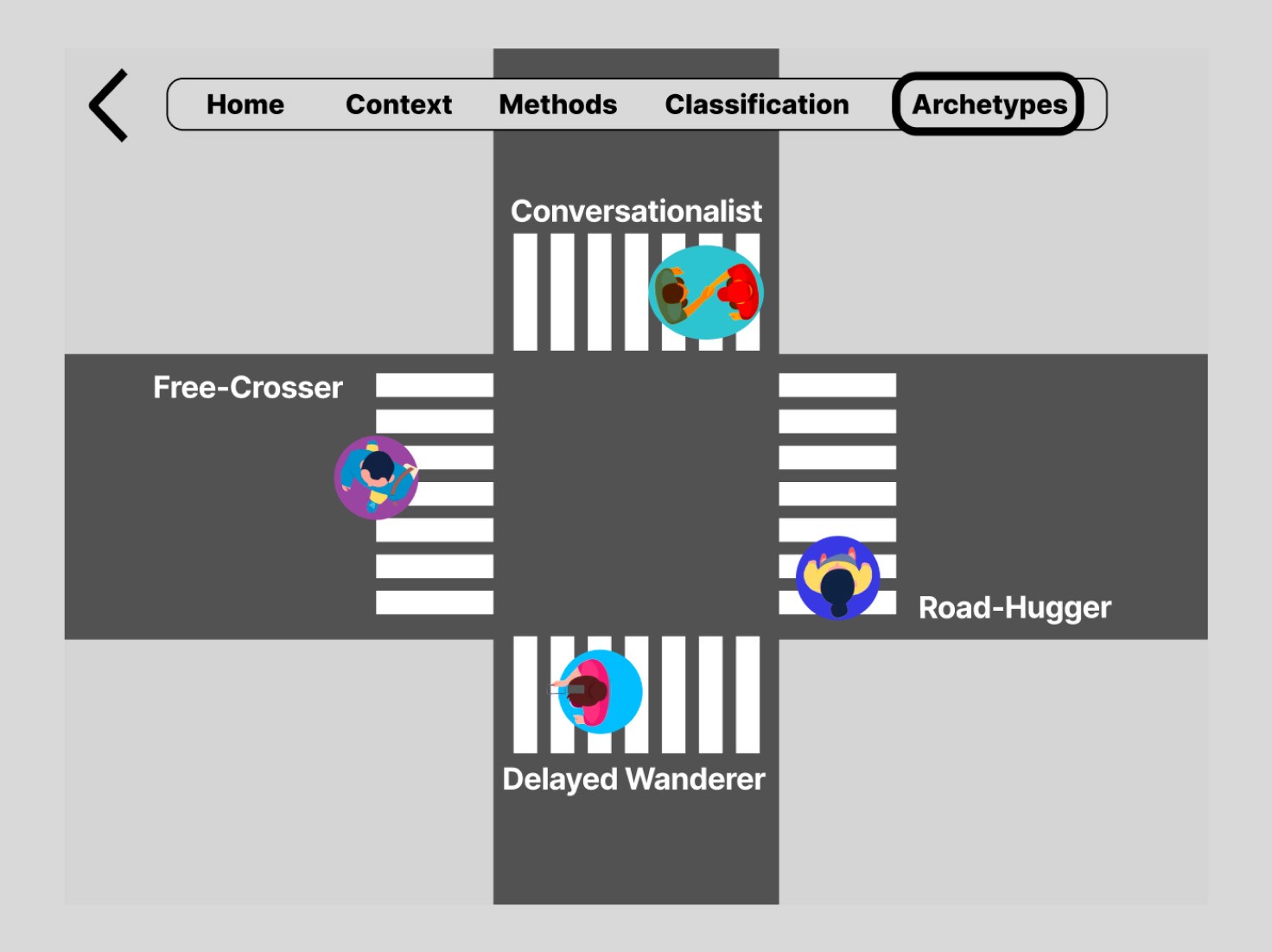
From these observations, several behavioral archetypes emerged:
The Leader: Assertive and time-efficient pedestrians who make quick, confident crossing decisions, often guiding others in groups.
The Follower: Individuals who rely on cues from others, letting the group or a dominant figure determine when and how to cross.
The Hesitant: Risk-averse pedestrians who pause or react slowly to changing traffic conditions, prioritizing safety over efficiency.
Key patterns observed across behaviors include:
Group dynamics: People in groups often follow a single decision-maker rather than independently assessing safety, highlighting the influence of social behavior on mobility.
Distractions: Phone use or social interactions frequently delayed crossings or created unpredictable pauses, which can affect traffic flow and safety.
Context familiarity: Pedestrian assertiveness increased when individuals were familiar with the intersection, suggesting that experience and environmental knowledge shape crossing behavior.
These insights reveal that pedestrian behavior is far from uniform, it is influenced by social context, environmental familiarity, and personal risk assessment. By classifying these behaviors into archetypes, we were able to translate raw observational data into actionable insights that could inform urban design, traffic planning, and human-centered mobility interventions.
Implementation
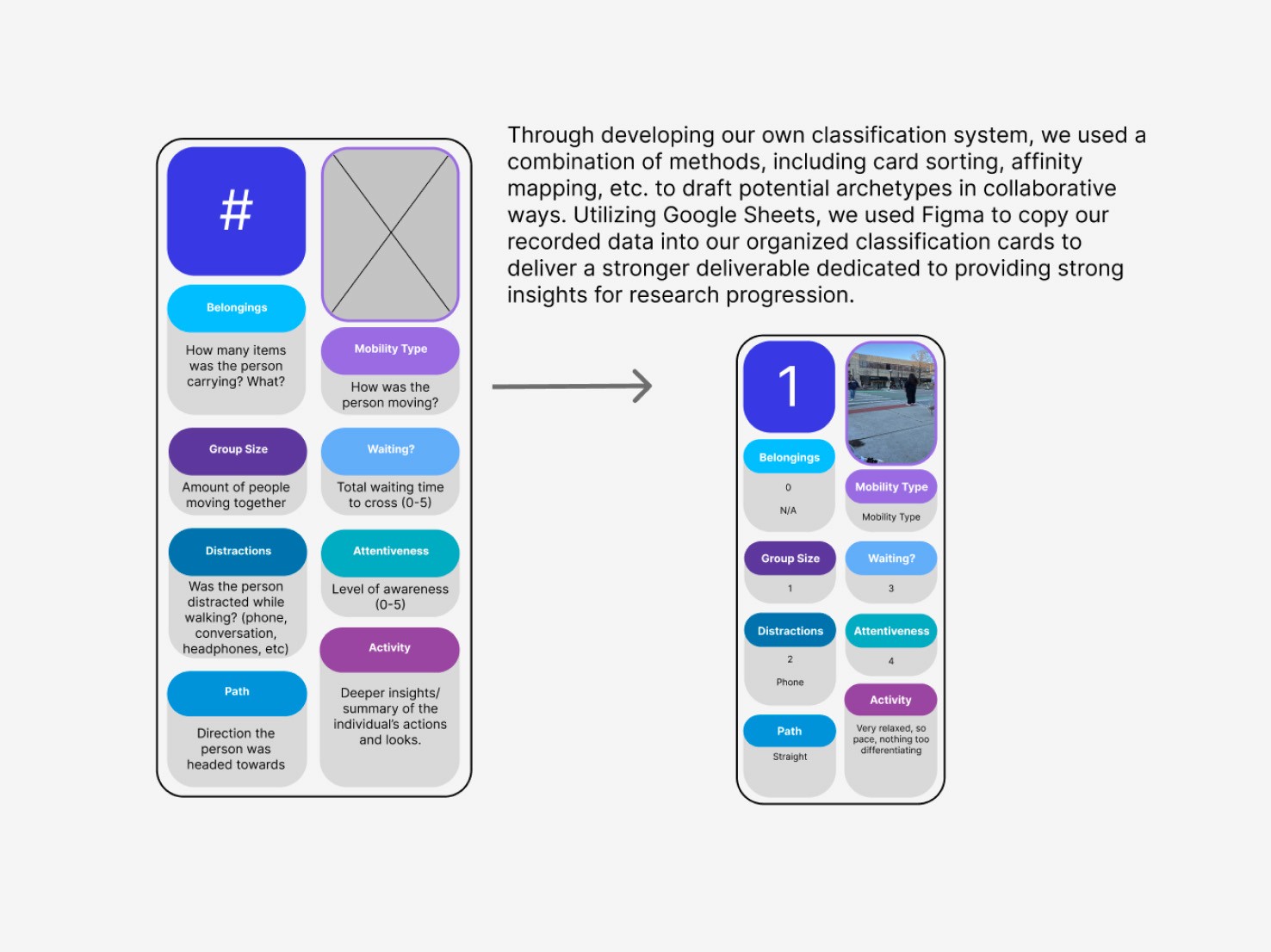
To translate our observational research into clear, actionable visualizations, we iteratively designed a behavioral archetype system using Figma. The goal was to communicate pedestrian behaviors in a way that was both data-driven and easily interpretable by stakeholders or urban planners.
Key Implementation Actions
Ideation & Visualization Planning: Used mind mapping and sketching to explore frameworks for clustering observations based on traits like decision confidence, distraction, and risk-taking.
Behavioral Classification Design: Created low-fidelity grids mapping behavioral dimensions and advanced to high-fidelity prototypes with motion, color, and annotation to emphasize distinctions.
Design Rationale:
Color: Warm tones indicated high assertiveness; cool tones indicated cautious or passive behavior
Layout: Cluster diagrams reflected proximity and overlap of behavioral types
Typography: Clean sans-serif text for clarity and legibility
Accessibility: Ensured sufficient color contrast and descriptive labels for each archetype
Testing & Iteration: Conducted peer feedback sessions to evaluate clarity, interpretability, and visual balance. Based on feedback:
Simplified visual scale and hierarchy
Added concise explanatory text and clearer legends for color meanings
Strengthened overall comprehension of behavioral classifications
Skills & Tools Applied
UX Research & Synthesis: Behavioral analysis, clustering, affinity mapping
Design & Prototyping: Figma, low- and high-fidelity prototypes, motion and annotation layering
Data Visualization: Color theory, cluster diagrams, visual hierarchy
Accessibility & Usability: Color contrast, legible typography, descriptive labeling
Iteration & Feedback: Peer testing, feedback synthesis, iterative refinement
This process allowed us to convert complex pedestrian behaviors into intuitive archetypes, producing a deliverable that was both visually engaging and practically useful for understanding human behavior at crosswalks.
Results
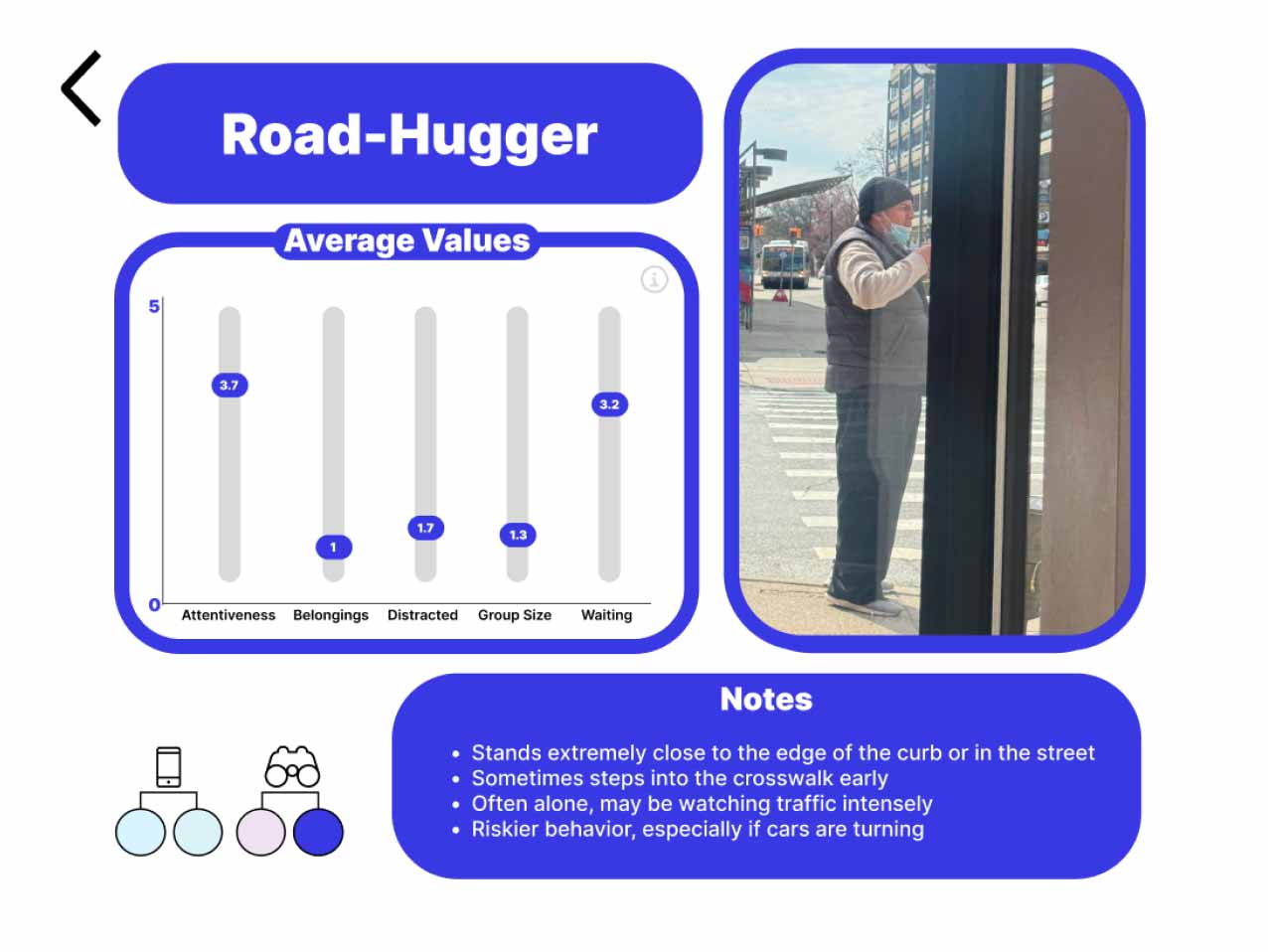
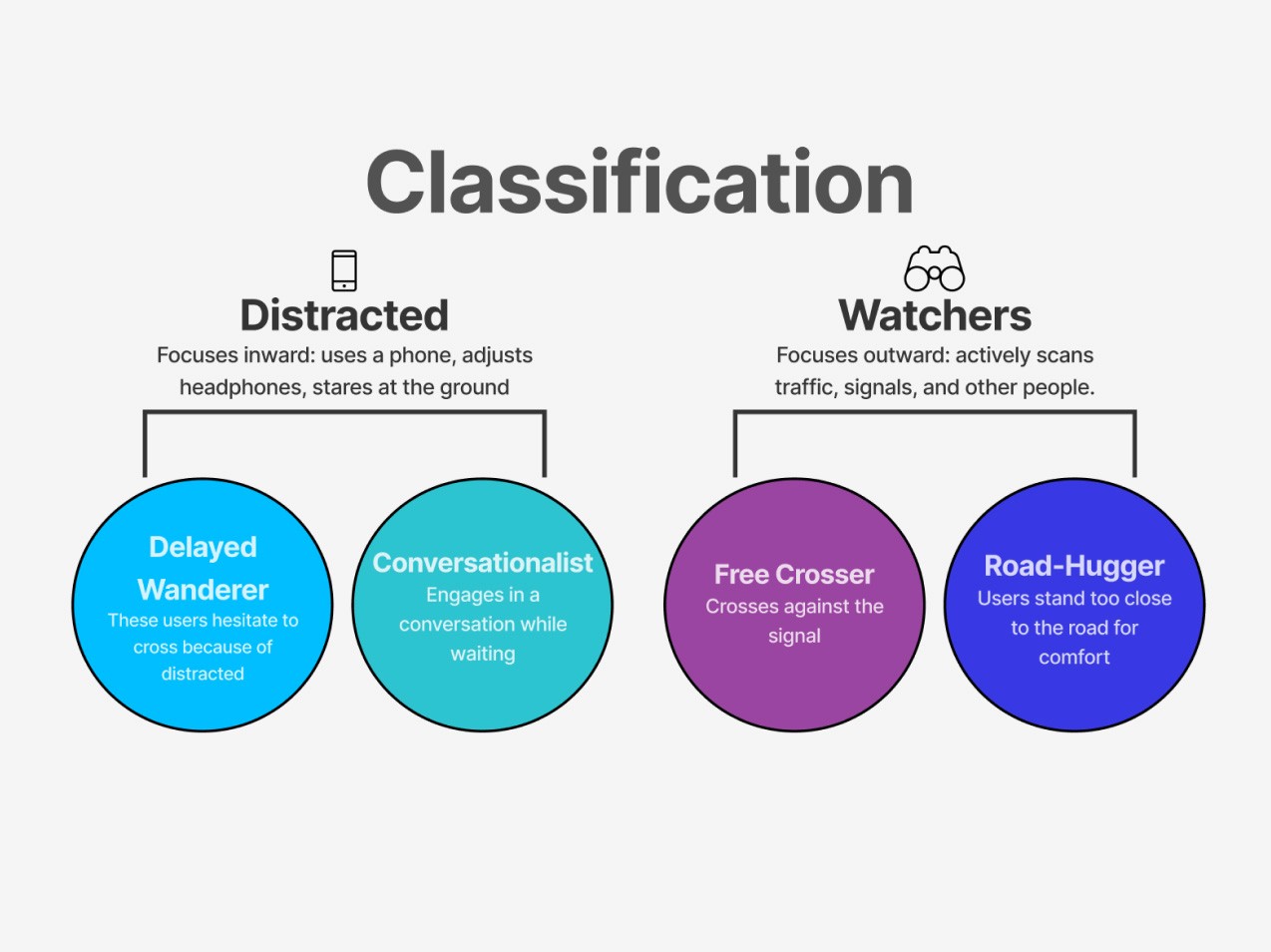
The final prototype successfully communicated the diversity of pedestrian crossing behaviors, providing a structured framework for behavioral archetype classification in urban contexts. By visualizing traits such as assertiveness, attentiveness, and group influence, the deliverable makes complex human behaviors understandable and actionable for urban designers, mobility planners, and UX researchers.
This project also highlighted the potential for applying behavioral insights to human-centered traffic design, urban analytics, and future mobility systems, showing how observation-driven research can directly inform design decisions.
Key Outcomes
Developed a visual system of behavioral archetypes that clearly differentiates pedestrian types
Demonstrated the impact of social context, distraction, and risk tolerance on pedestrian decision-making
Created an actionable framework for urban planning and human-centered mobility design
Strengthened team skills in merging qualitative observation with visual system design
Reflection & Learnings
Learned to observe, synthesize, and represent behavior with both empathy and structure
Iterative design and peer feedback emphasized the importance of clarity, accessibility, and storytelling in visualizations
If revisiting the project, would expand the dataset with video analysis or cross-city comparisons to strengthen classification validity
Most proud of transforming complex, real-world observations into a structured, design-forward visualization that bridges urban design and UX principles
This project demonstrates how human behavior analysis can influence design thinking beyond digital interfaces, reinforcing the value of research-driven, empathetic design in real-world contexts.