Automotive Prototyping
Read time:
6 min
Client:
Stellantis
Industry:
User Experience Design
Start:
End:
Duration:
16 Weeks
Tools:
Figma
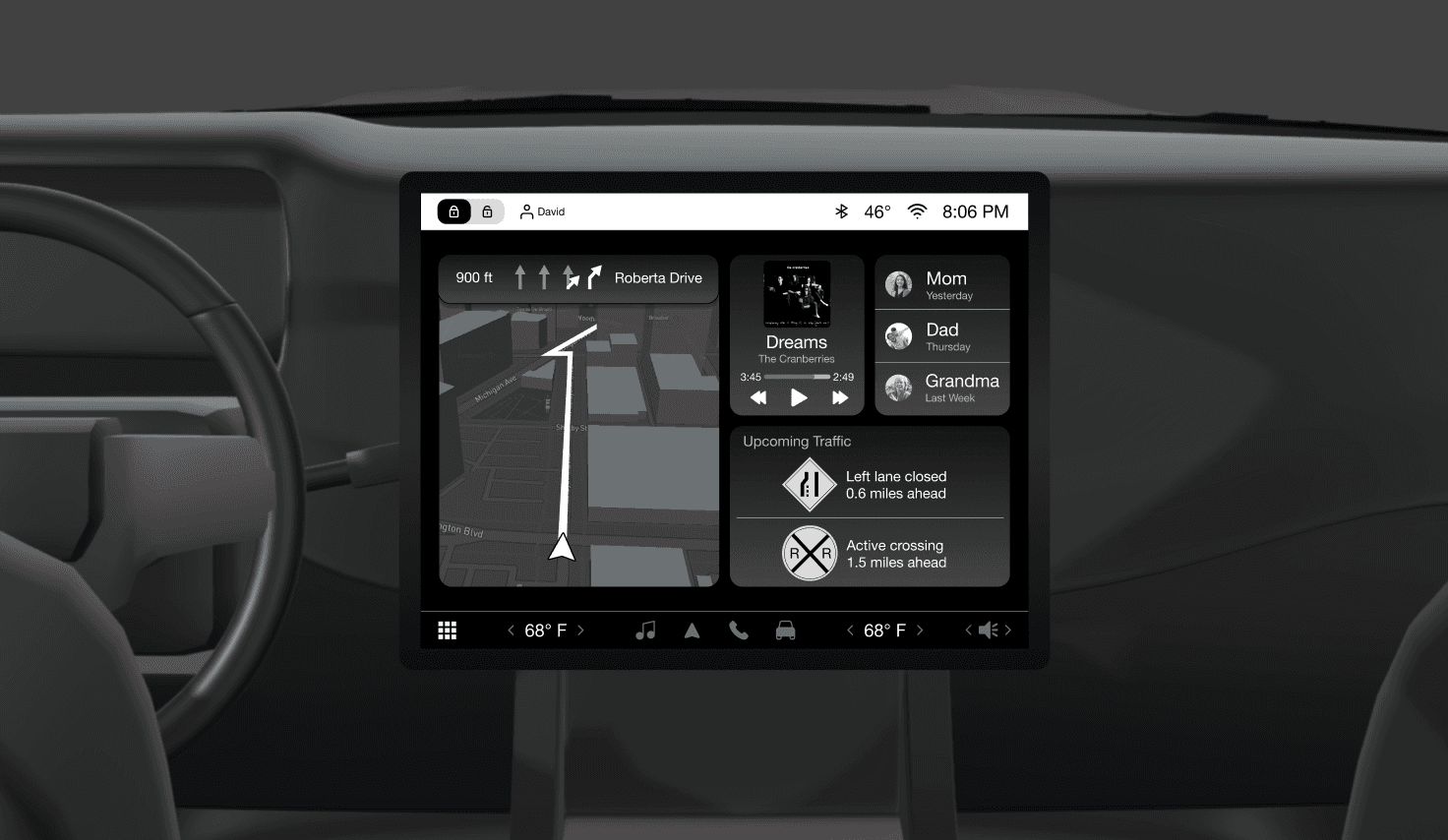
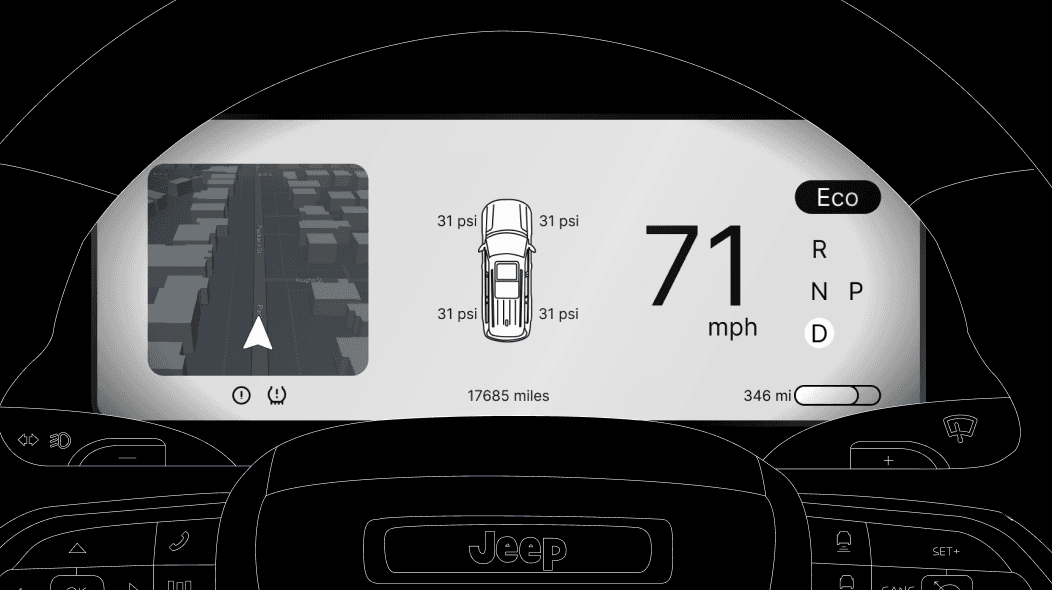
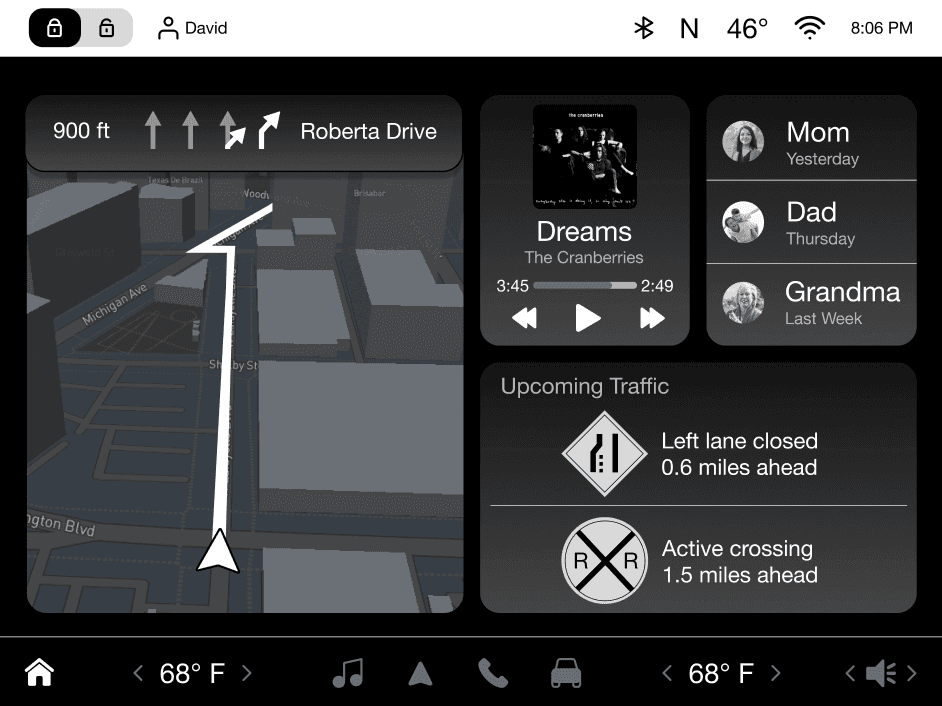
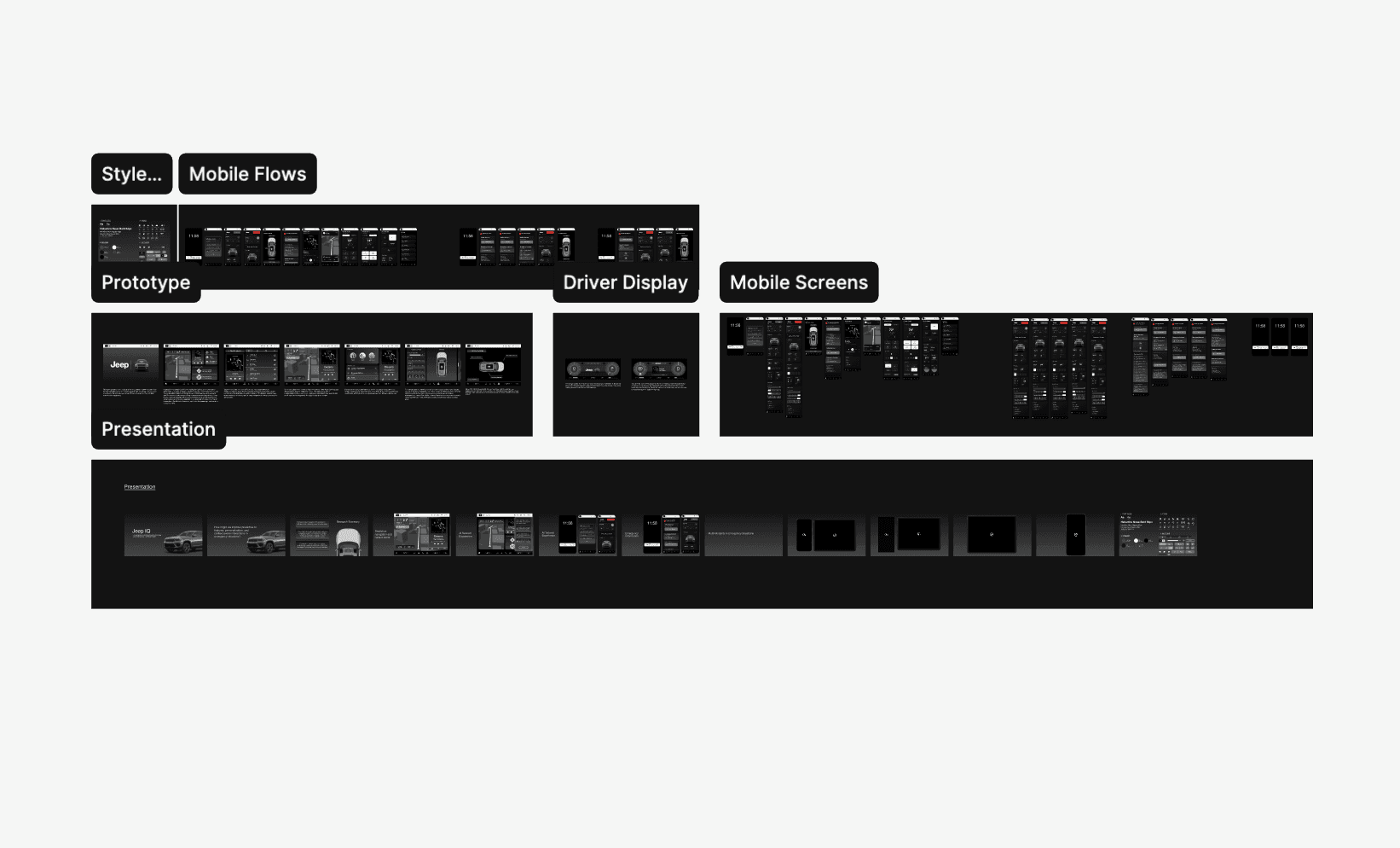
This project focused on rapidly prototyping a redesigned infotainment experience for the Jeep Grand Cherokee. The goal was to rethink how drivers interact with core vehicle systems, from navigation and media to AI-driven maintenance and traffic sensing, and build a cohesive, modern interface that feels intelligent, intuitive, and distinctly Jeep.
The outcome was a fully clickable prototype that reimagines the digital cockpit experience, designed with a focus on clarity, flow, and adaptive system behavior.
Starting point
Modern in-car infotainment systems have become increasingly complex, often overwhelming drivers with dense menus and inconsistent control patterns. This fragmentation pulls attention away from the road and creates unnecessary cognitive load — the opposite of what a safety-critical interface should do.
To understand how to approach a redesign for the Grand Cherokee, I began by examining the broader landscape of automotive UI.
Competitive Analysis
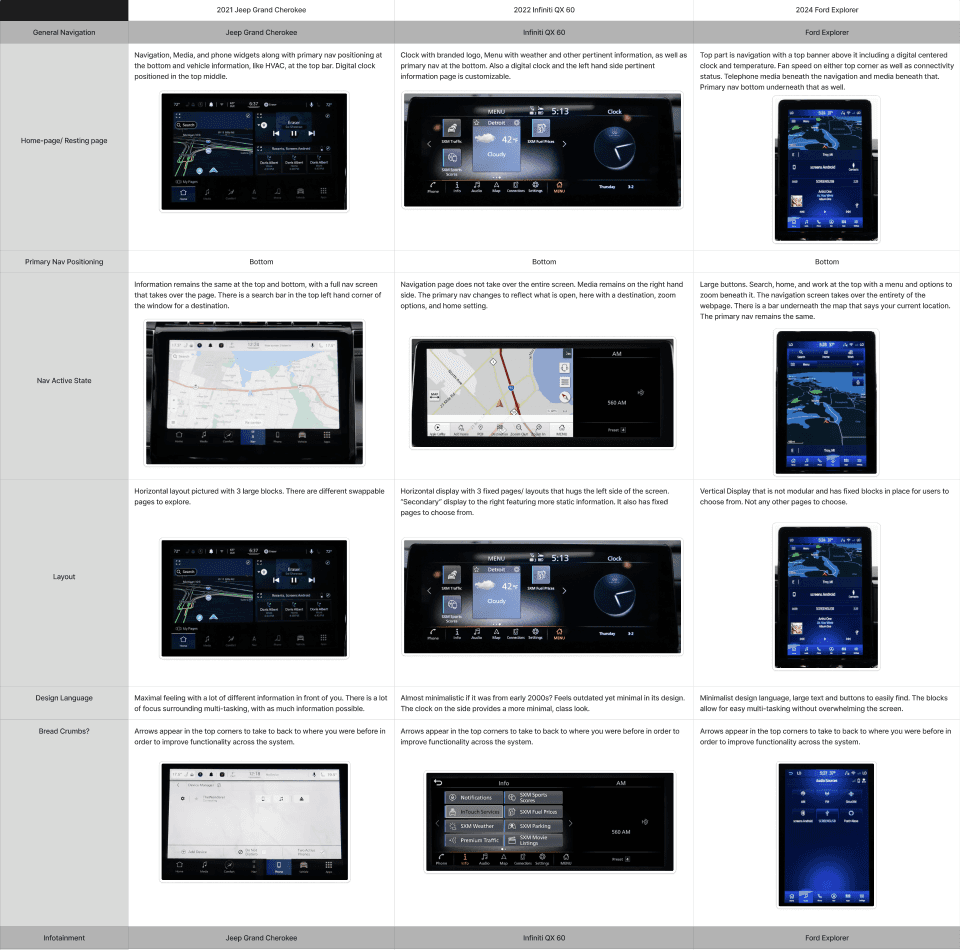
I conducted a competitive analysis of three vehicles comparable to the Grand Cherokee, evaluating 35 features across each system. This included navigation flows, climate interactions, media controls, personalization, safety integrations, and voice systems.
The goal was to uncover:
How different brands structure and prioritize similar features
What interaction patterns feel intuitive versus cumbersome
How visual identity influences usability and perception
The various ways manufacturers solve the same interaction problems
This research built a strong foundation for understanding where the Grand Cherokee stands, what opportunities exist, and how a redesigned system could reduce friction while strengthening brand identity.
This competitive insight became the backbone for all design decisions moving forward.
Problem solving
My goal was to preserve Jeep’s distinct aesthetic while bringing clarity, hierarchy, and structure to the infotainment system. I began with a full UX audit of the current interface, mapping task flows, evaluating navigation depth, and conducting a heuristic evaluation to identify friction points. This revealed inconsistencies in hierarchy, redundant touchpoints, and visual patterns that competed with functional clarity. Using these insights, I reorganized the information architecture to create more fluid, predictable pathways while maintaining Jeep’s rugged brand expression.
Because automotive UX is safety-critical, each design decision was informed by domain-specific research. Throughout the project, I completed a series of micro-assignments aimed at building auto-industry knowledge and grounding the redesign in validated user experience principles. These tasks included:
Driver Field-of-View Analysis: Mapping sightlines and identifying safe interaction zones for primary vs. secondary tasks.
Cognitive Load Assessment: Reviewing NHTSA/HMI guidelines and evaluating how menu length, gesture requirements, and labeling affected mental effort.
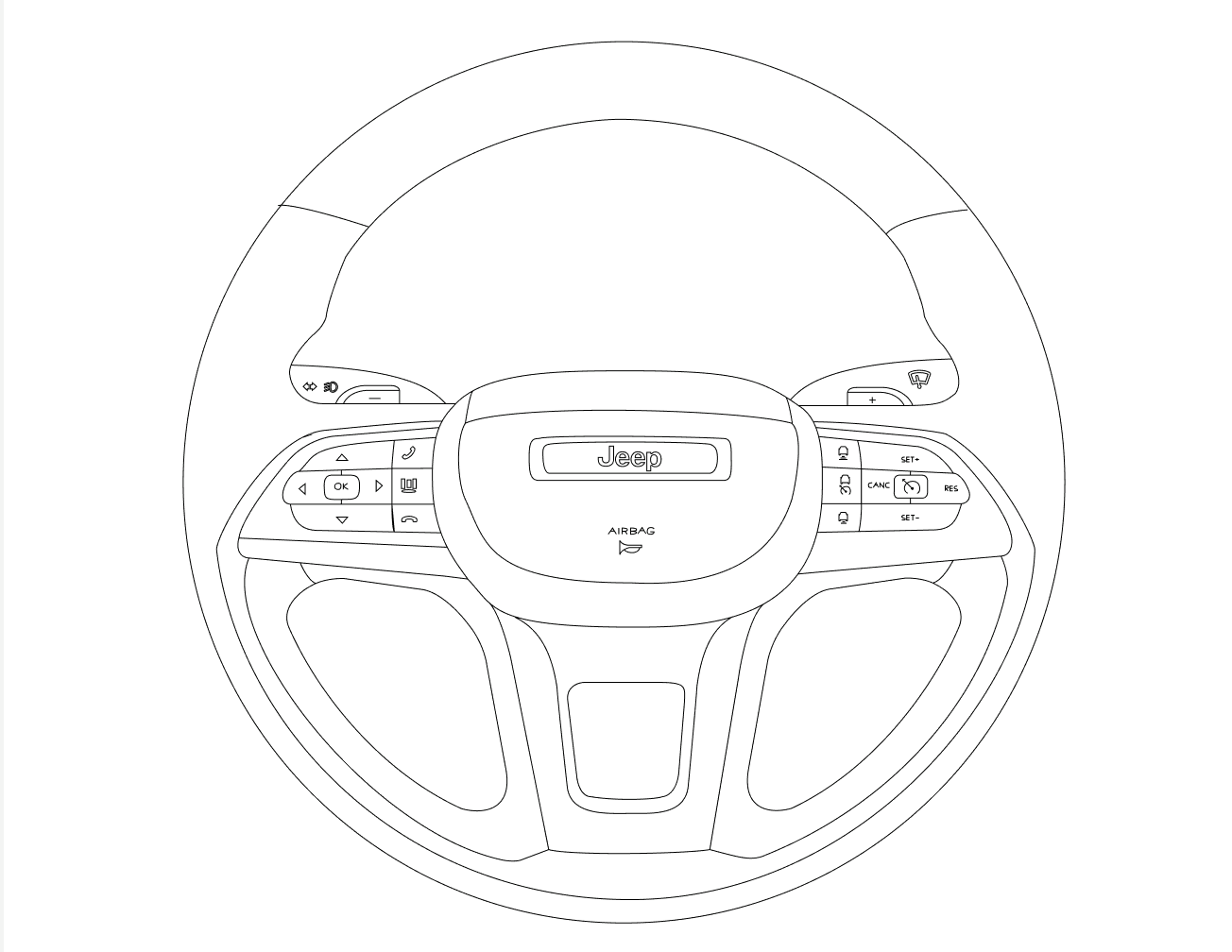
Interaction Pattern Benchmarking: Comparing touch, voice, and physical control integrations across competitor vehicles.
Task Flow Decomposition: Breaking down key driver goals (e.g., adjusting climate, navigating, switching media) into simpler, fewer-step interactions.
UI Consistency Review: Auditing iconography, spacing, and typography to reduce ambiguity and visual noise.
Prioritization Framework Creation: Developing a logic for what information and controls should surface contextually based on driver needs and driving conditions.
These activities grounded my early wireframes and prototypes, ensuring that every layout decision served both user safety and brand integrity. By combining domain research, UX evaluation techniques, and system-level reorganization, I was able to craft an infotainment direction that is both cognitively efficient and distinctly Jeep.
Implementation
With a validated visual system and interaction framework in place, I transitioned into full-scale implementation, translating the refined concepts into functional, production-ready interface designs. This stage focused on building out complete user flows, ensuring component-level consistency, and stress-testing the system under real driving constraints. Each decision aimed to uphold the design principles defined earlier: clarity, predictability, safety, and Jeep-authentic character.
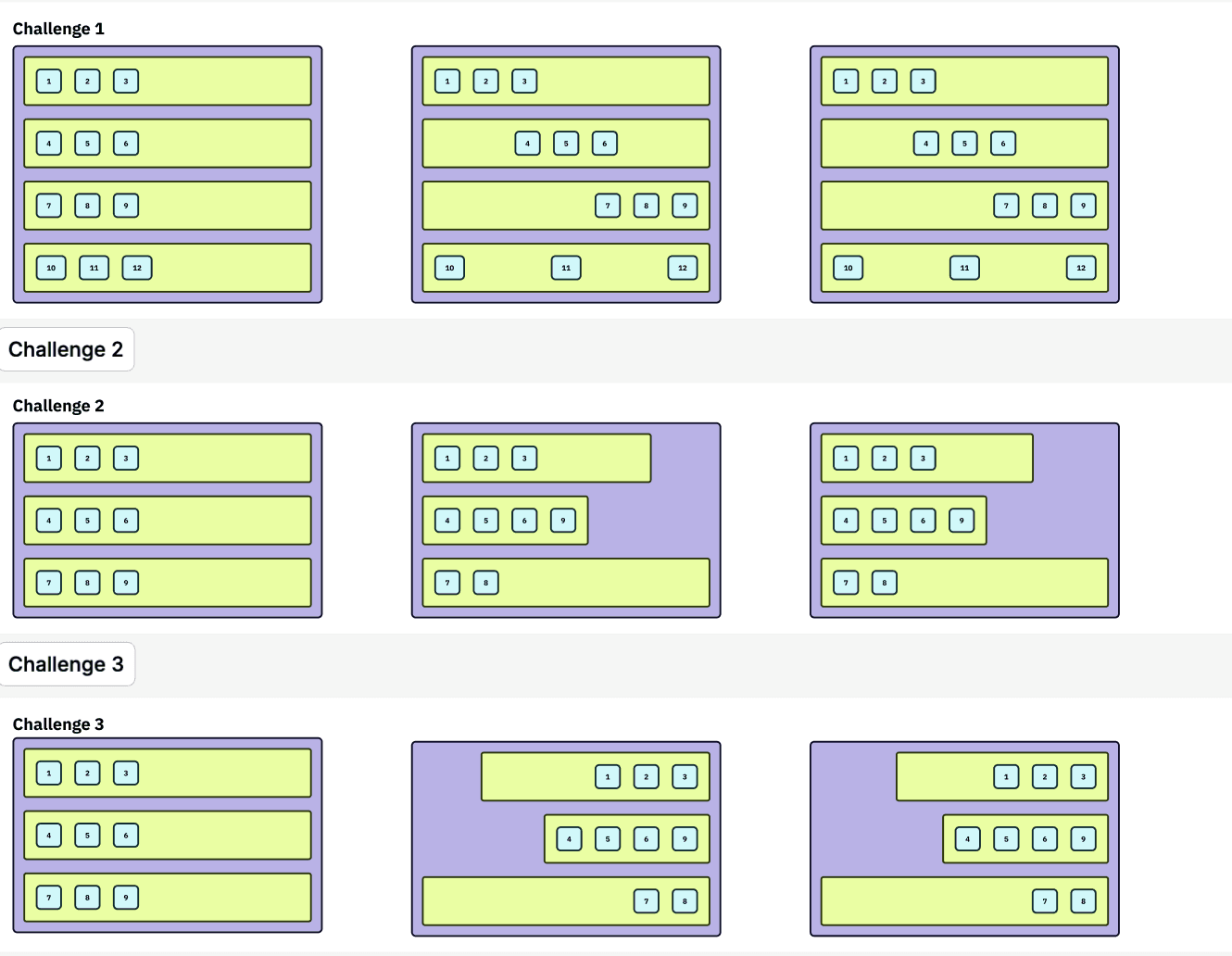
I expanded the interface from isolated screens into an interconnected ecosystem, creating modular components that could adapt across diverse contexts like navigation, media, climate control, and drive-assist states. Using the established grid and typography system, I implemented responsive layouts optimized for different screen sizes and aspect ratios found in modern Jeep interiors. The iconography system was integrated into a reusable library, allowing for rapid screen assembly while maintaining consistent meaning and recognition across touchpoints.
To ensure the system supported real driver needs, I performed several implementation-focused tasks, including:
Building Complete End-to-End User Flows: Media switching, navigation entry, climate adjustments, and notification handling.
Applying Interaction Models: Defining when gestures, taps, or physical controls should take priority based on task criticality.
Creating Context-Aware States: Designing modal behaviors, alerts, quick actions, and AI-driven recommendations that adapt dynamically to the driving environment.
Constructing Component Variants: Developing scalable widgets (cards, controls, buttons, panels) with rules for condensed and expanded states.
Designing Safety-First Visual Hierarchies: Prioritizing legibility, contrast, and quick-glance comprehension for active states such as turn-by-turn directions or lane guidance.
Integrating System Feedback Patterns: Error states, confirmations, loading indicators, and progress transitions tuned for minimal distraction.
Prototyping High-Fidelity Interactions: Simulating animations, microinteractions, and state changes to test timing, clarity, and responsiveness.
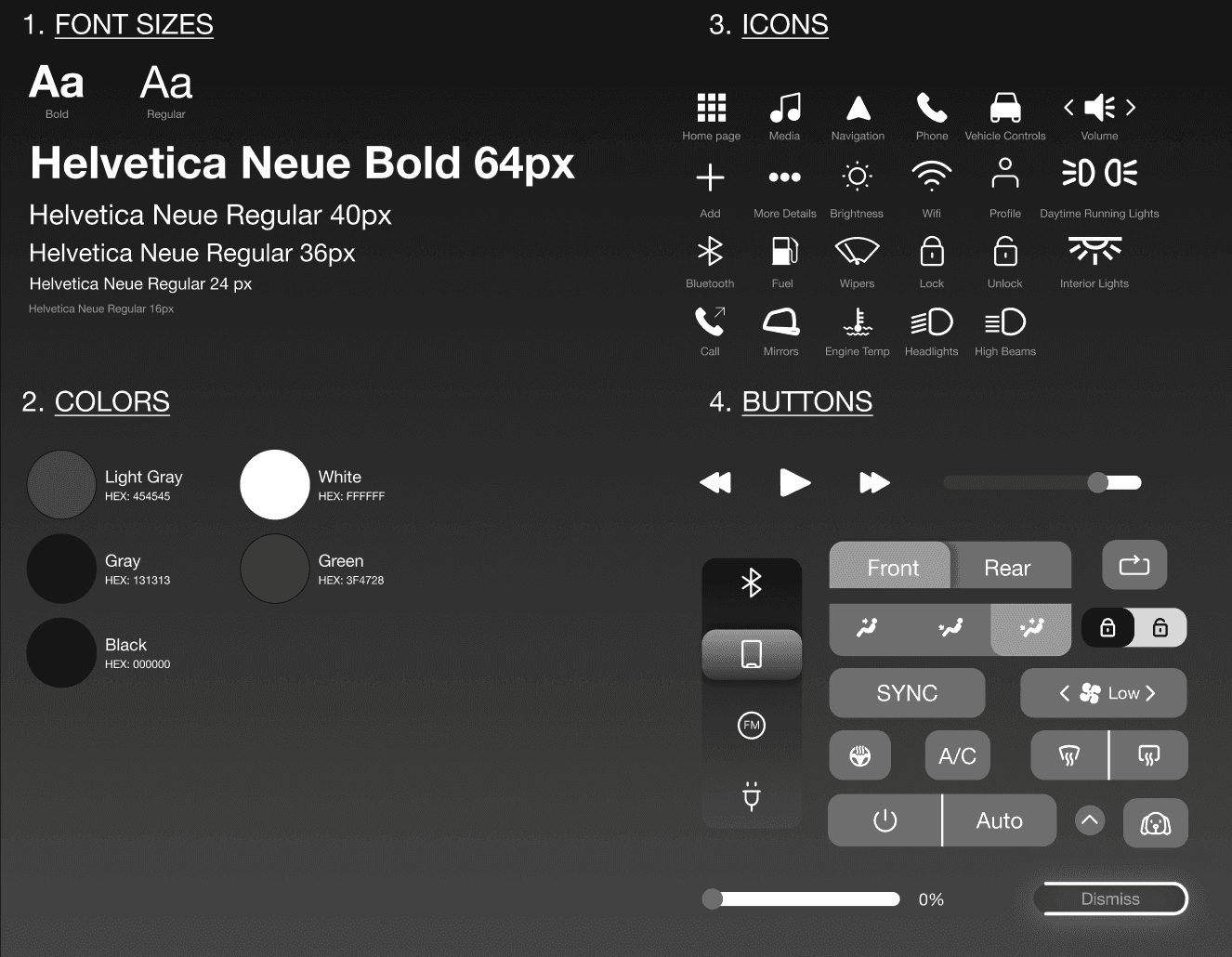
Throughout implementation, I continuously cross-referenced the style guide to maintain alignment and prevent visual drift, ensuring that every screen felt unified and intentional. This iterative, system-oriented approach allowed the design to scale smoothly across features while retaining the rugged refinement that defines the Grand Cherokee experience.
By the end of this phase, the system had evolved from conceptual directions into a complete, cohesive interface, ready for usability testing, refinement, and real-world integration into the in-vehicle environment.
Results
The culmination of this research-driven process was a fully realized set of infotainment concepts that felt cohesive, intuitive, and distinctly aligned with the Grand Cherokee brand. By grounding every design decision in a clearly defined style guide, the final interfaces demonstrated strong visual consistency and a level of clarity that supports safe, at-a-glance interaction, critical for in-vehicle environments. The system’s typography, iconography, and color language worked together to reduce cognitive load, while the modular grid enabled clean, structured layouts that scaled effectively across different screen types and driving contexts.
Through iterative prototyping and refinement, the designs also showed measurable improvements in usability and workflow efficiency. Navigation paths were shortened, common tasks required fewer taps, and key driver information surfaced more predictably across the system. The cohesive patterns developed early on allowed me to create screens more quickly and with fewer revisions, accelerating the overall design process. Most importantly, the final outcome illustrated how a research-backed style guide can transform a large, complex system into a unified experience, strengthening both brand identity and user trust in the interface. If this were implemented in a real vehicle context, it would offer drivers a cleaner, more intuitive, and more confidence-building IVI experience.