PurplePad
Read time:
5min
Client:
Class Project
Industry:
UX Design + Research
Start:
End:
Duration:
5 Weeks
Tools:
Figma, Qualtrics
PurplePad is a student-focused housing platform designed to unify the search experience for both subleases and year-long rentals. The project brought together UX research, flow design, and collaborative prototyping to create a clearer, more intuitive housing ecosystem for students and landlords alike. Our goal was to reduce the frustration students consistently expressed with existing platforms and introduce a solution that actually reflects how students search, compare, and secure housing.
This project allowed me to combine qualitative research, user flow architecture, and product thinking into a single end-to-end design sprint. I guided the creation of the core interactions and student pathways, then collaborated with a teammate who translated those flows into a vibe-coded prototype. The result is a cohesive concept that demonstrates my ability to translate research insights into a structured, user-centered product vision.
Starting point
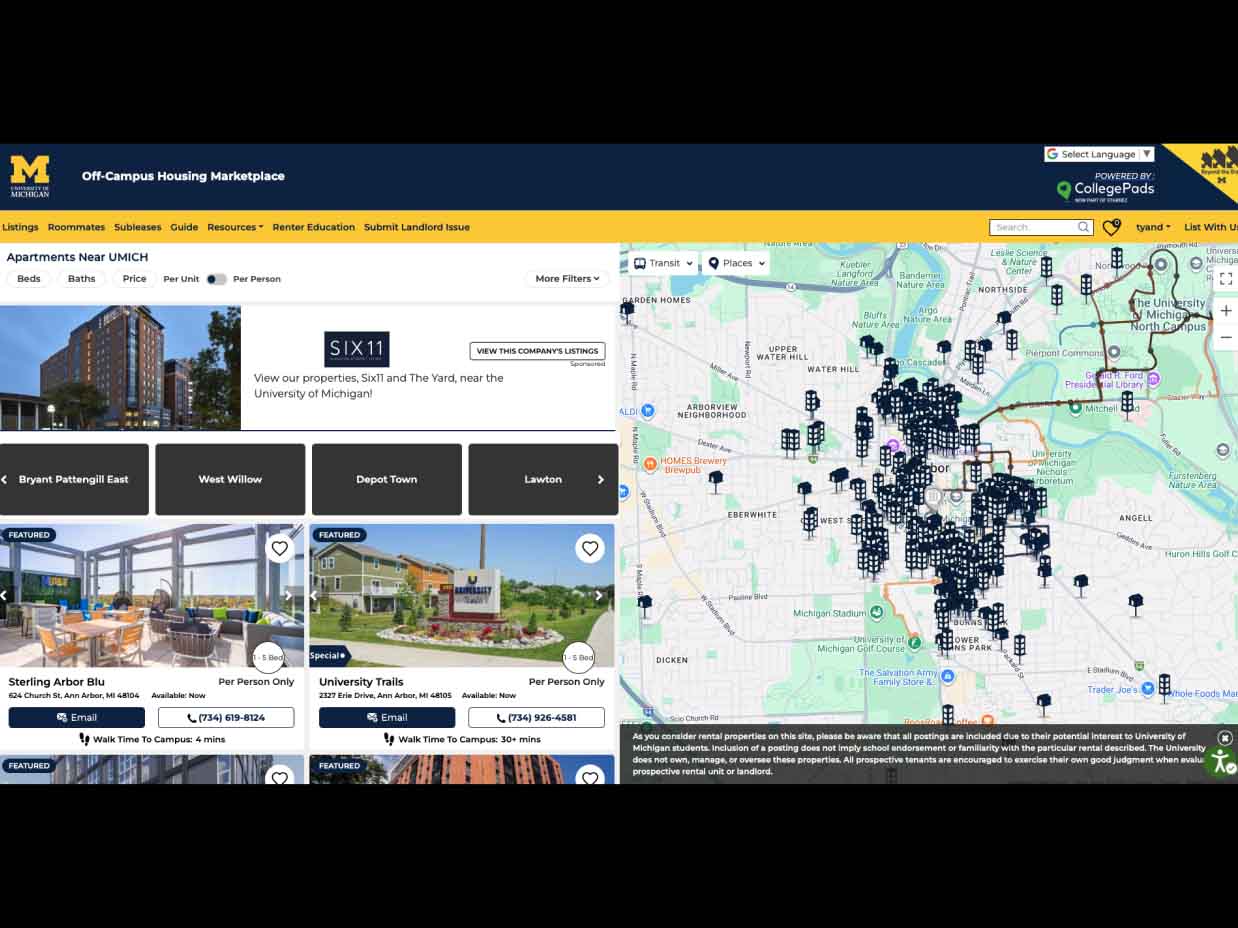
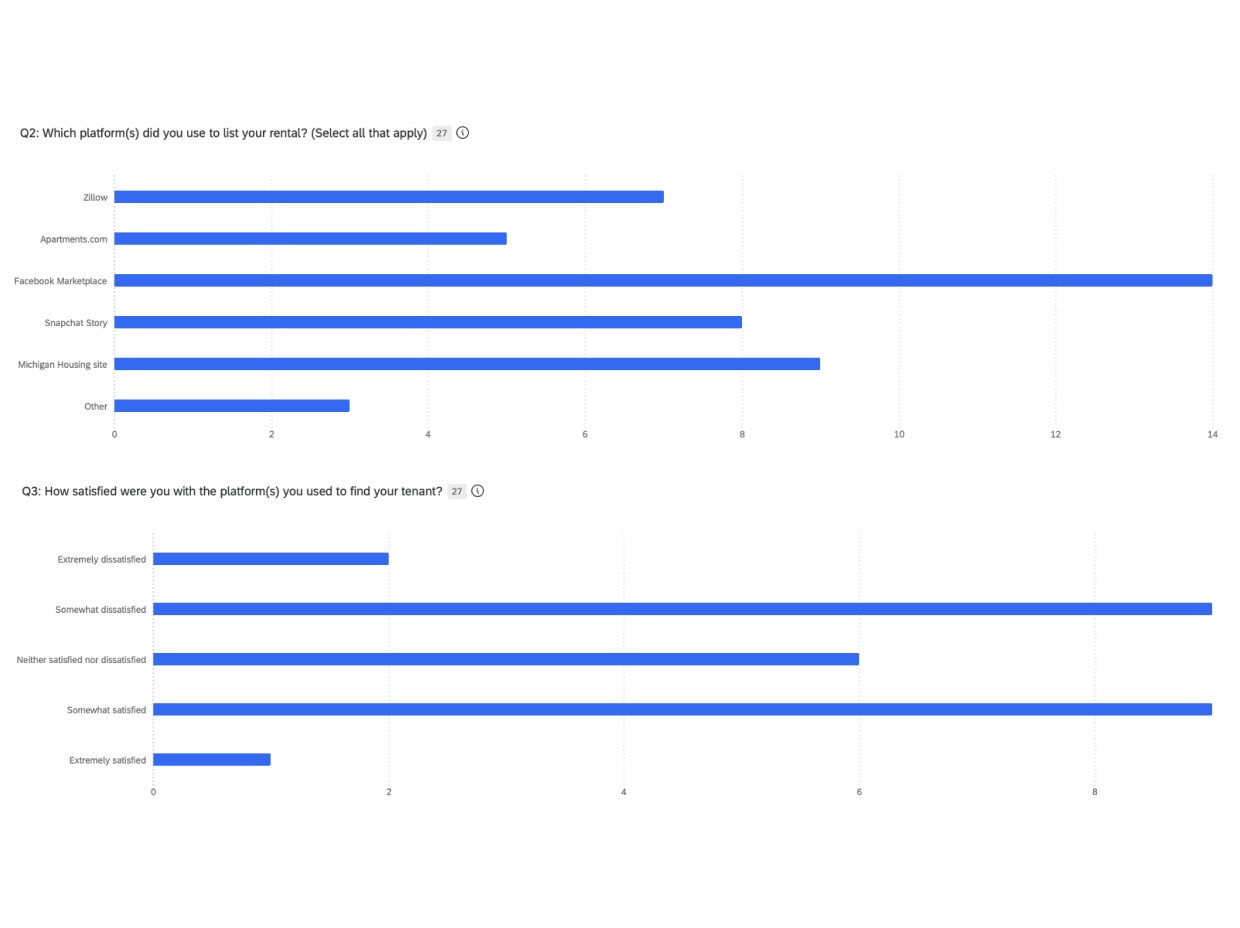
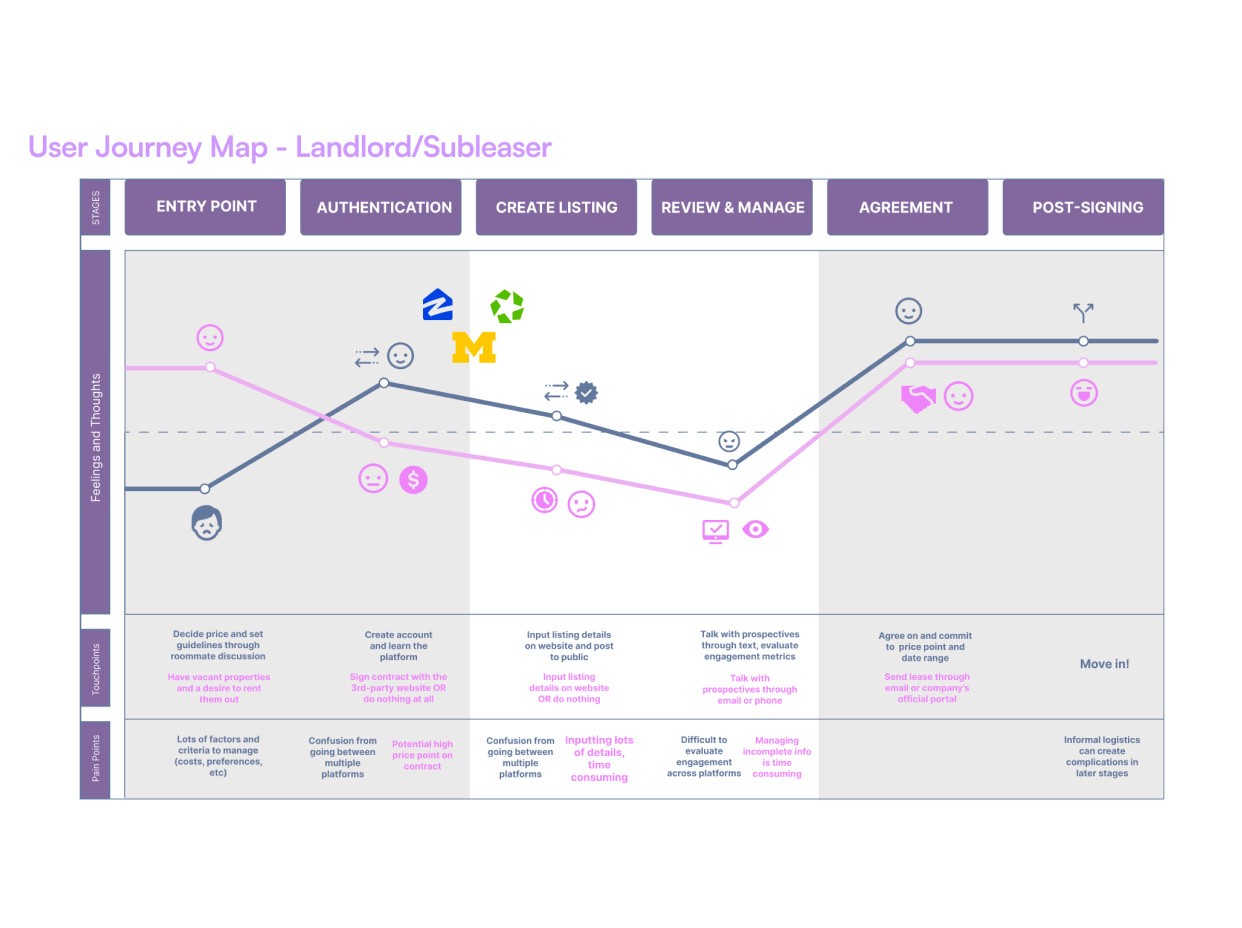
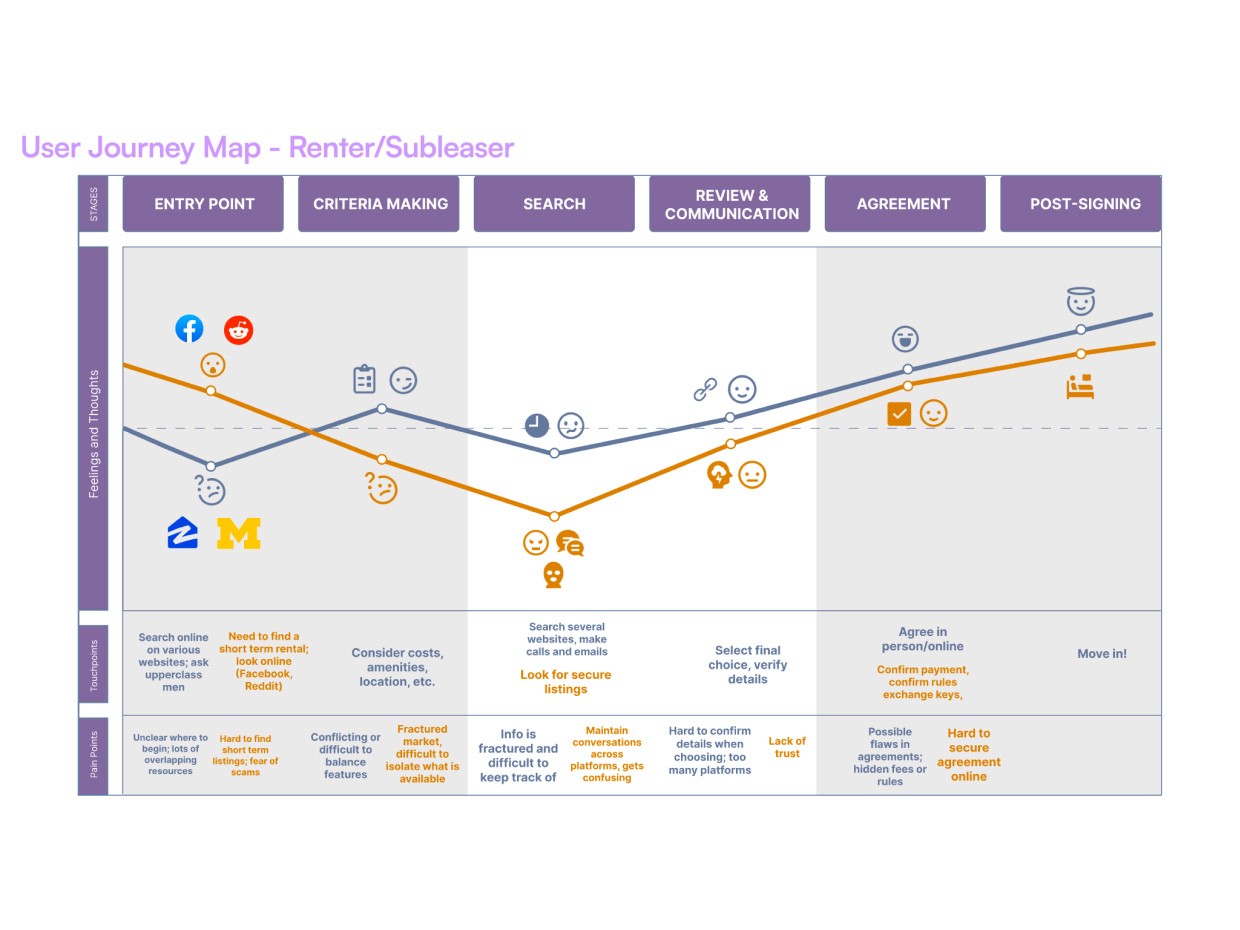
Our project began with a shared frustration echoed by students across our campus: finding housing is confusing, stressful, and unnecessarily fragmented. Students routinely bounce between Facebook groups, student housing sites, Google Docs, and word-of-mouth to secure a place to live. The existing platform intended to centralize housing was cluttered, outdated, and lacked the filters, clarity, and transparency students needed.
To ground our redesign, I facilitated a focus group and distributed a survey that captured both qualitative insights and large-scale student patterns. These methods revealed recurring challenges:
What students struggled with:
Difficulty differentiating subleases vs. full-year rentals
Poor filtering options that made it hard to find relevant housing
Listings with missing or inconsistent information
Confusion about lease durations, availability, and pricing
A general lack of trust in landlord listings or outdated posts
What landlords lacked:
No clear dashboard to manage listings
No insights into student engagement
No easy way to track listing performance
These pain points shaped every decision that followed, reinforcing that the platform needed to support clarity, transparency, and efficiency for two very different but interconnected users.
Problem solving
The core challenge was designing a platform that addresses the full ecosystem of student housing—not just the browsing experience. To tackle this, I synthesized research into distinct problem statements that guided the design:
Student Problems
“I don't know what’s still available or trustworthy.”
“I need a quick way to find subleases without digging through pages.”
“Important details are hidden, inconsistent, or unclear.”
“There’s too much noise and not enough organization.”
Landlord Problems
“I can post listings, but I cannot manage or analyze them.”
“I have no idea what students engage with or care about.”
“There’s no place where my listings feel valued or visible.”
From these insights, I designed structured user flows that clarified each user’s journey:
Key Flows Designed:
Student search → filtering → listing comparison → contact flow
Sublease-specific flow (a major research pain point)
Landlord dashboard → listing creation → analytics view
Trust-building features (verified badges, consistent listing templates)
These flows helped ensure that PurplePad wasn’t just a prettier version of existing sites—it was designed to solve the structural issues students had been facing for years.
UX Skills Highlighted:
Research synthesis & insight extraction
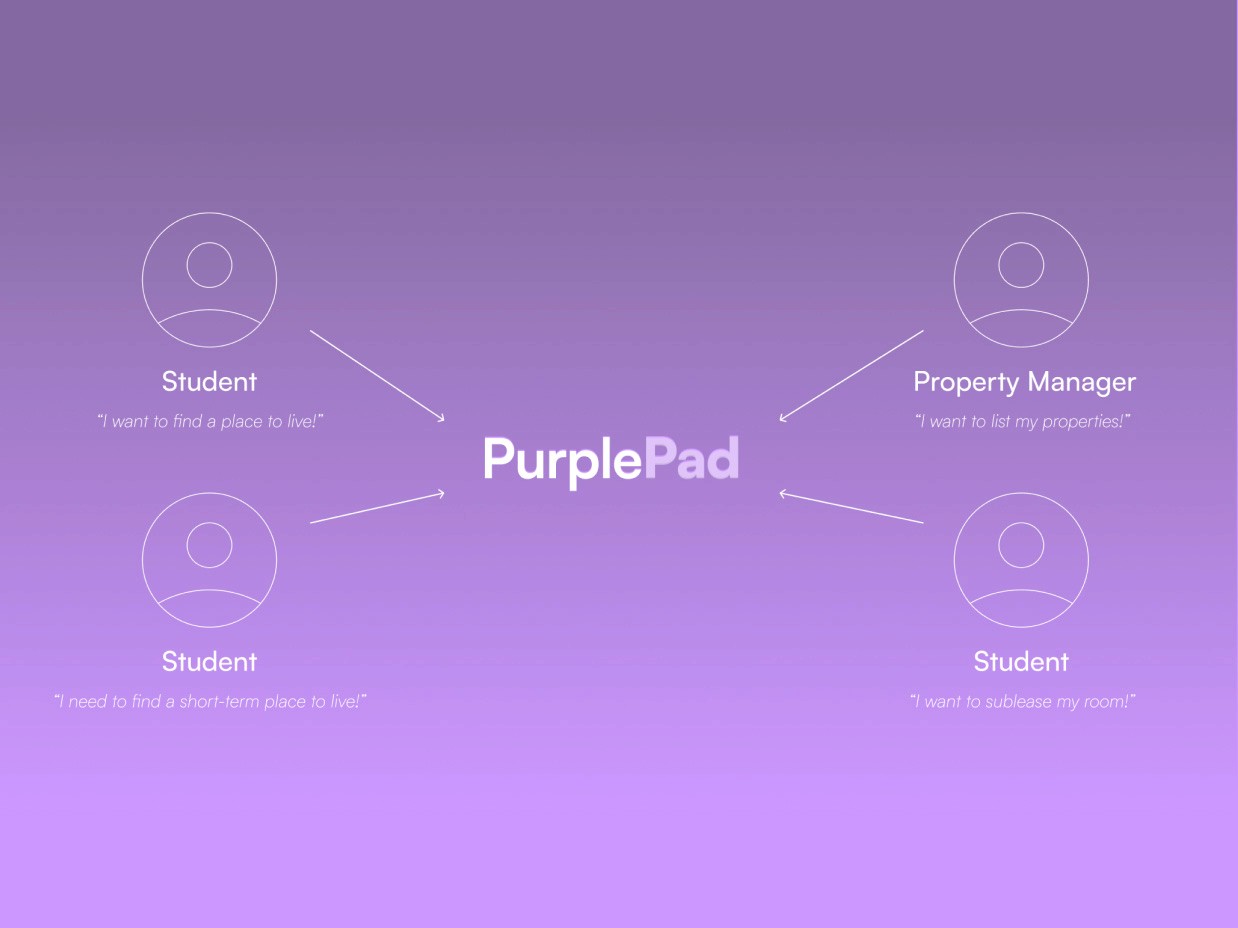
Mapping multi-user ecosystems
Designing flows that reduce cognitive load
Prioritizing clarity and reducing friction
Implementation
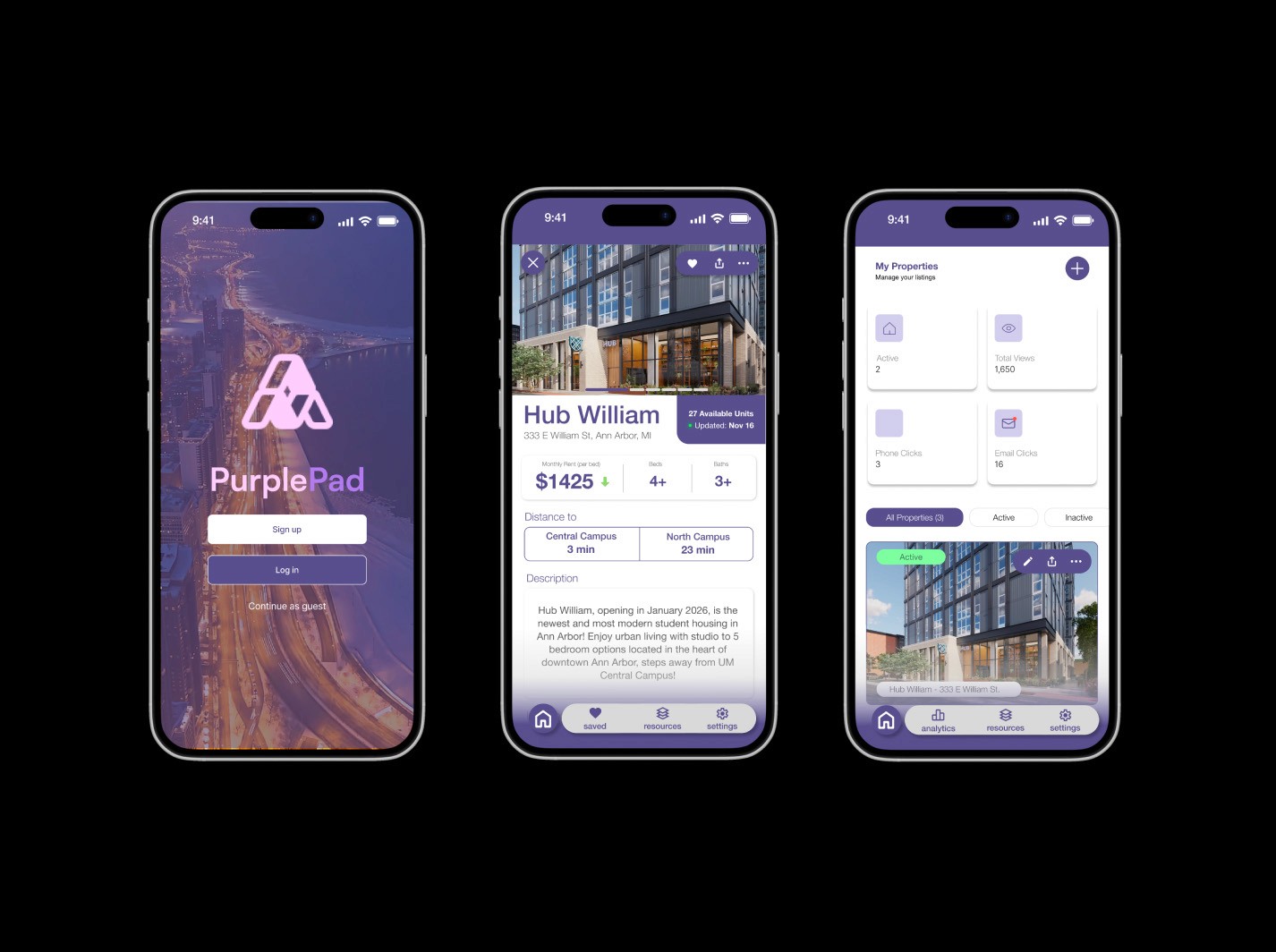
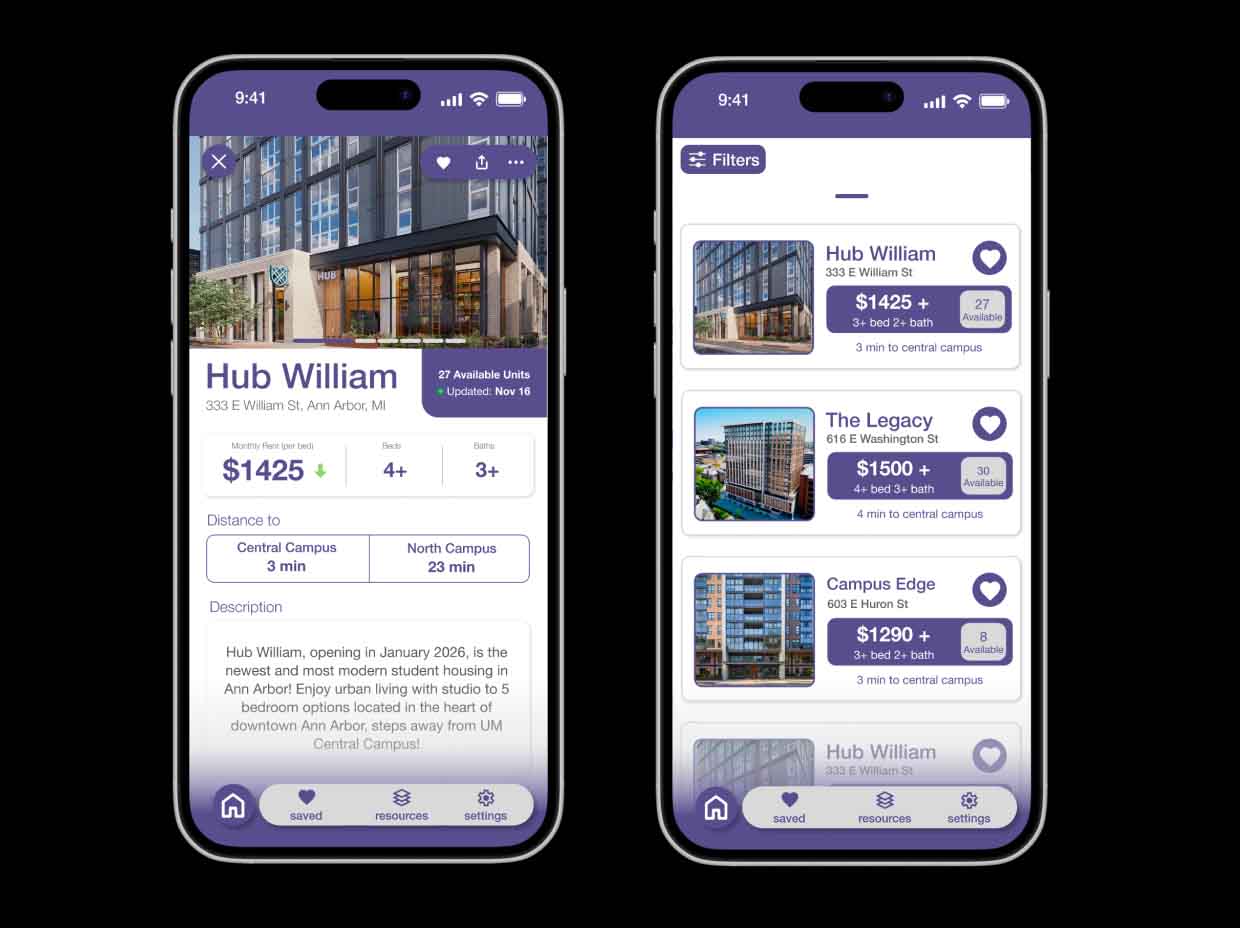
Once the core flows were defined, I translated them into structured wireframes and low-fidelity prototypes. My priority was clarity, designing pages where students could easily differentiate lease types, find essential details quickly, and navigate without cognitive overload. The student experience emphasized approachable filtering, clean listing pages, and intuitive progression from browsing to contacting a landlord.
Simultaneously, I designed the landlord experience to support easy listing creation, management, and insight viewing. The analytics dashboard was intentionally simple, highlighting metrics like views, engagement, and listing performance to help landlords make informed decisions.
My teammate then brought these designs to life through a vibe-coded prototype, allowing us to test the feel of the flows and validate their coherence. Throughout the process, I leaned heavily on information architecture, usability principles, and iterative design, ensuring each screen supported the larger system instead of functioning in isolation.
For Students:
A structured filter system (lease type, duration, distance from campus, price range, roommates)
Clean listing cards with the most relevant details upfront
Robust listing pages with clear breakdowns: amenities, lease length, utilities, roommates, verified status
A save & compare feature to reduce decision fatigue
A consistent UI system that differentiates subleases with distinct visual cues
For Landlords:
Step-by-step listing creation with required fields that ensure consistency
A listing management dashboard with status indicators
Analytics: views, contacts, save rate, and engagement patterns
I collaborated closely with my teammate as they transformed these designs into a vibe-coded prototype. This helped stress-test the interactions and validate our assumptions about flow, clarity, and navigation.
Results
The resulting PurplePad concept delivered a significantly clearer, more intuitive experience than existing tools, validated through informal walk-throughs with students and reviewers. Students reported that the flows felt more predictable, data was easier to find, and subleases were finally treated as a first-class housing option rather than a hidden afterthought.
Key Outcomes:
Stronger, more transparent listing structure that reduced confusion
Clear search and filtering pathways designed for student needs
Two cohesive user experiences tailored to students and landlords
Landlord analytics dashboard that introduced visibility never available in the original system
A solid foundation for future development, thanks to clear user flows and prototypes
Beyond improving the housing experience, this project sharpened my ability to work across research, UX architecture, and early prototyping. It also strengthened my understanding of how to design multi-user systems, where different groups’ needs must interlock seamlessly without compromising simplicity.
PurplePad now stands as a comprehensive showcase of my ability to connect research insights to actionable design decisions that improve real student workflows.