Seattle Trade Routes
Read time:
5 min
Client:
Class Project
Industry:
Data Analytics
Start:
End:
Duration:
3 Weeks
Tools:
R, Gemini & Claude (AI-Augmented Workflows), Kepler.gl, GitHub Pages
Seattle Trade: Global Reach, Local Roots is an interactive web-based data product that visualizes the contrast between Seattle’s massive global maritime infrastructure and the hyper-local economy of Pike Place Market. Developed as the Pike Place Market PDA Council implements its 2024 Master Plan, this tool aims to drive local patronage by highlighting the unique, stable revenue source provided by regional residents amidst a globalizing economy.
Starting point
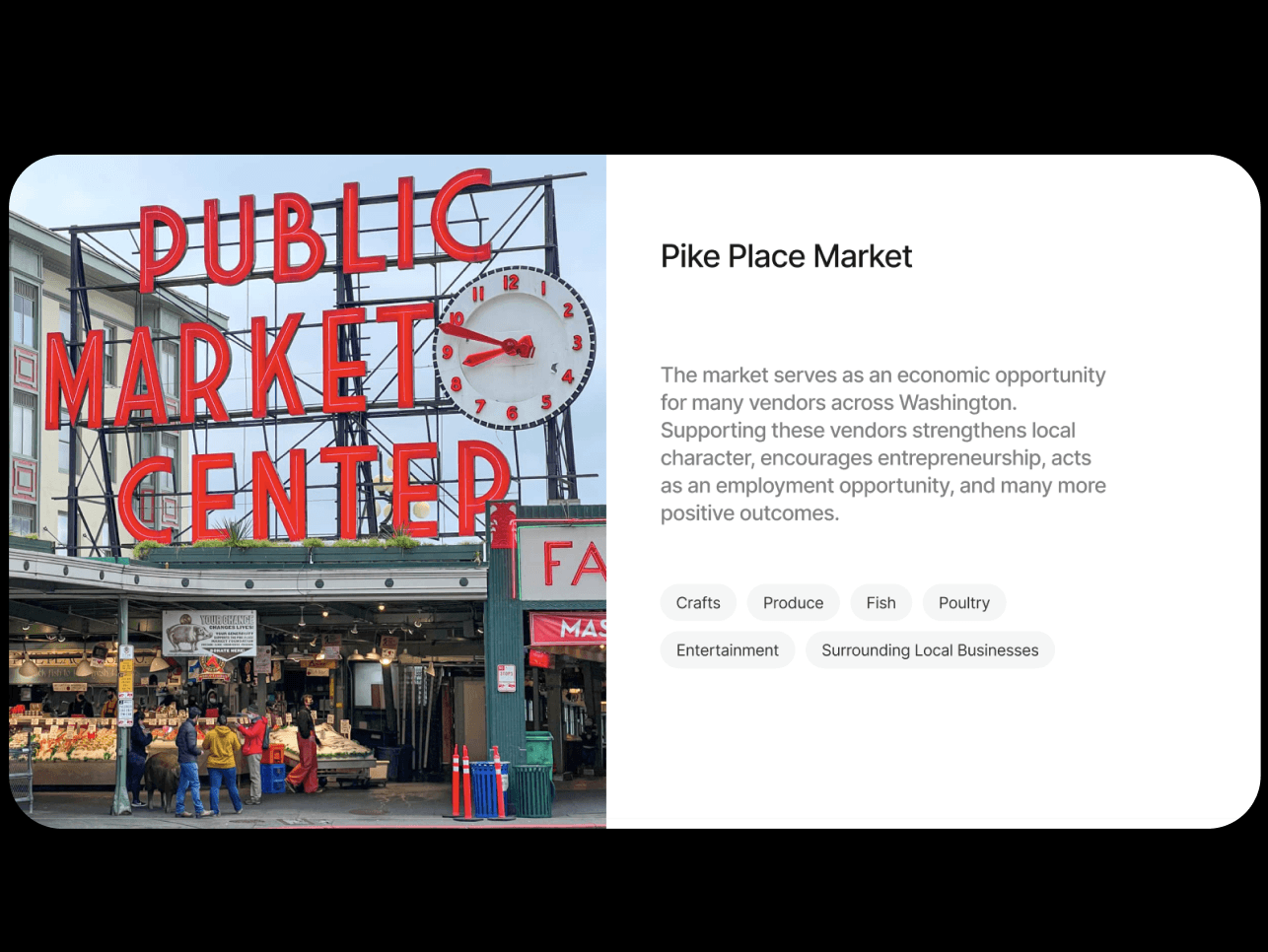
The project was motivated by the financial reality of Pike Place Market, where expenses are projected to rise by 62% over the next decade.
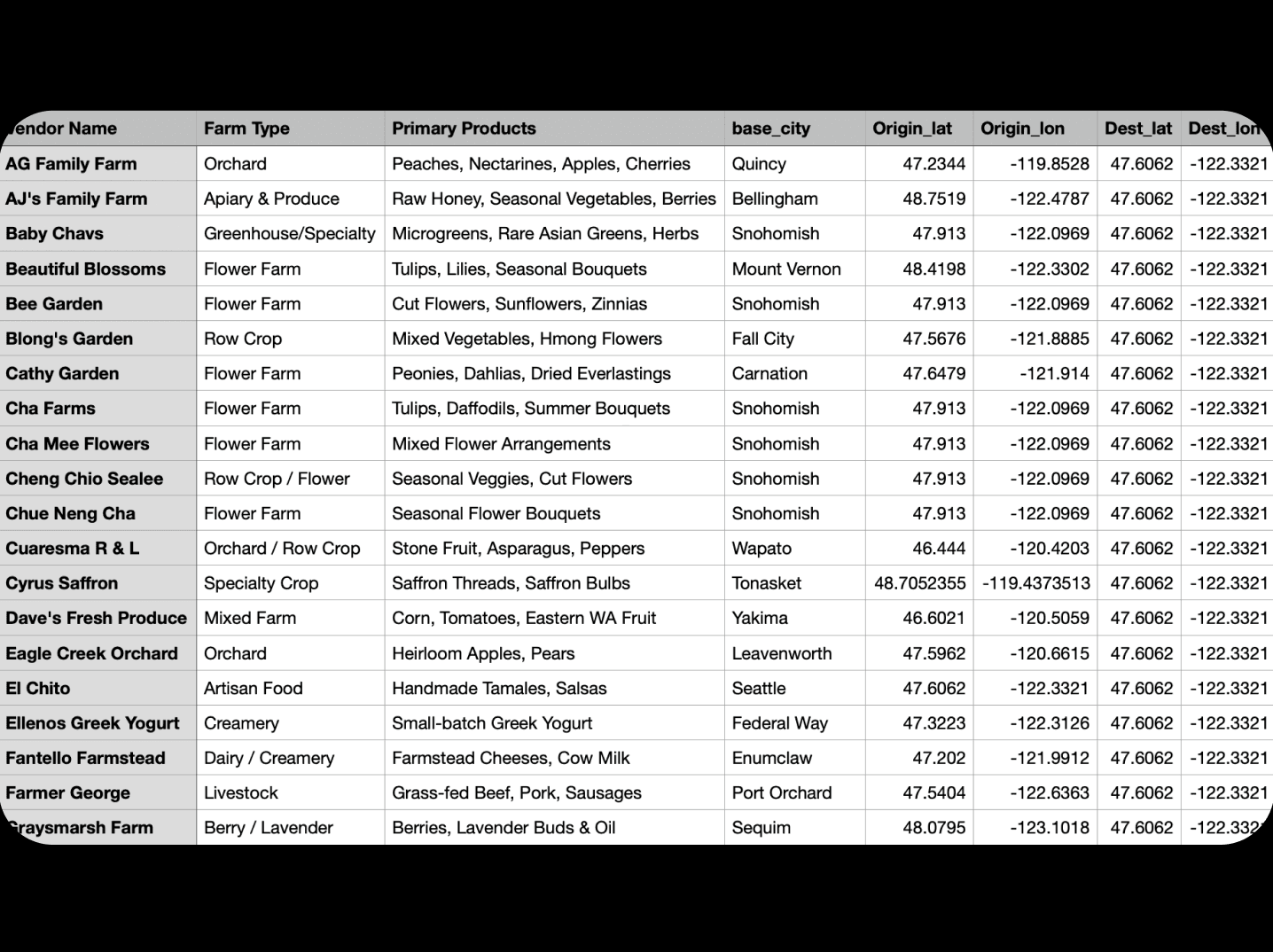
Strategic Goal: Increase local loyalty by allowing residents to see exactly who is hosted at the market, where they are based, and the unique types of farms they represent.
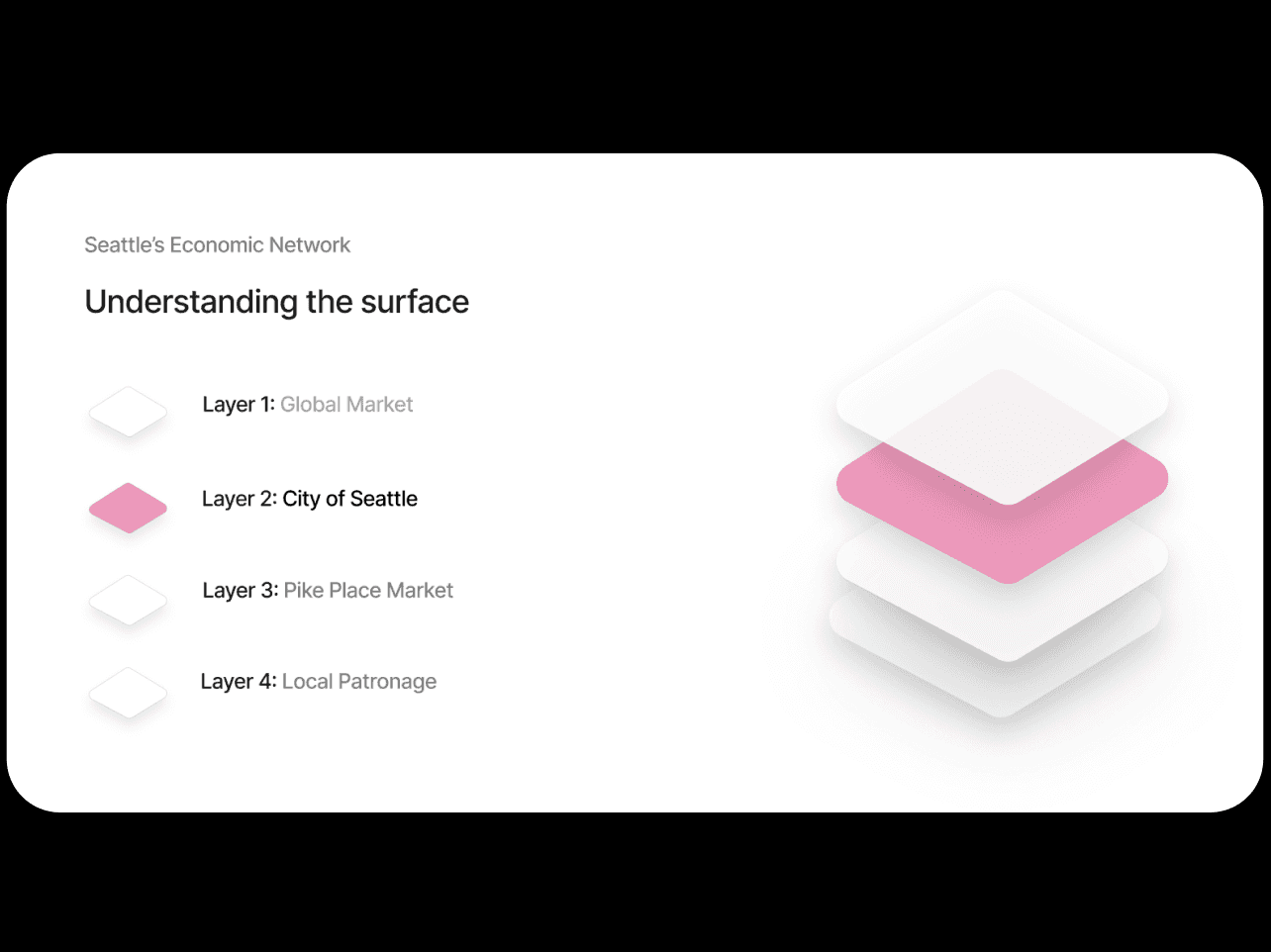
Hypothesis: Representing Seattle as a "Hub" in a spatial network would allow users to understand the immense scale their city operates on and the importance of protecting the local economy
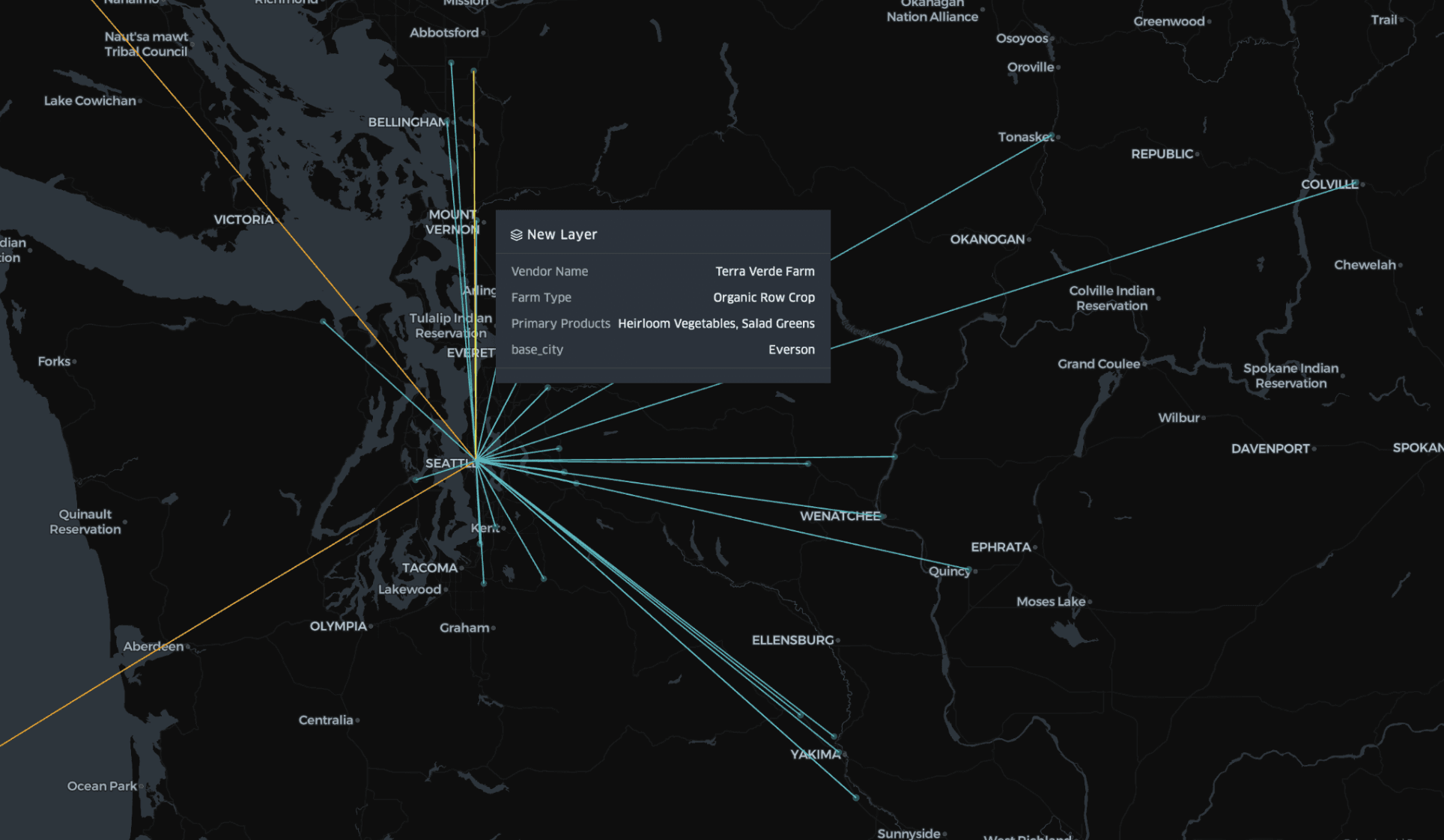
Design Language: We chose a dual-color system (Orange for global trade and Teal for local commerce) to provide immediate visual differentiation between the two economic scales.
Problem solving
As a PM-focused lead, I managed a complex multi-stage data refinement strategy to overcome significant "noise" in maritime and local records.
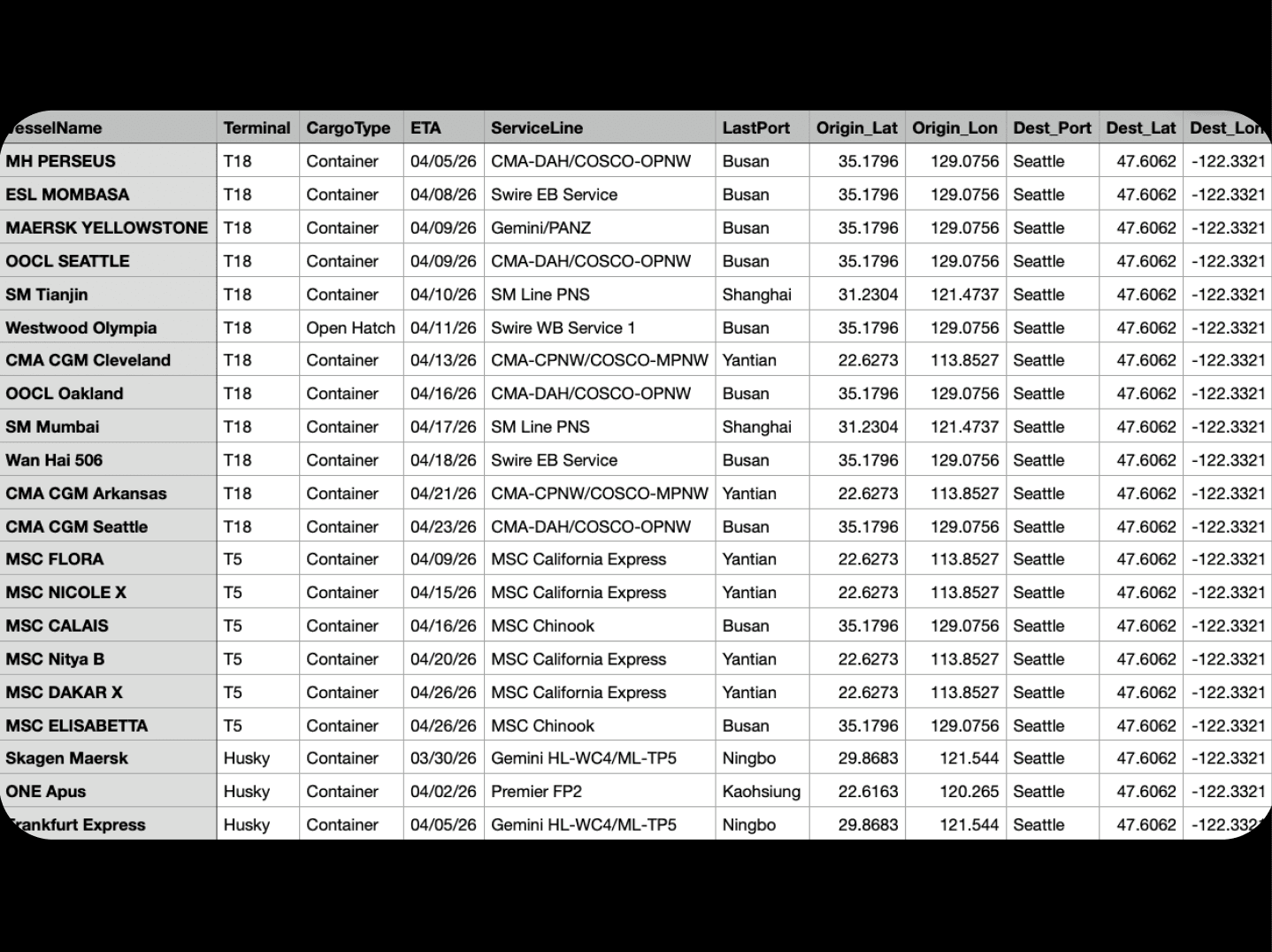
Filtering at Scale: We started with a raw global dataset of over one million entries. I isolated relevant commerce by filtering for specific Vessel Type codes (Cargo/Tankers) to exclude private traffic.
AI-Augmented Deduplication: I utilized a mix of Claude and Gemini to collapse thousands of repetitive AIS pings into a "hitlist" of 99 unique vessels based on MMSI and IMO identifiers.
Truth Verification: When AI analysis flagged potential inaccuracies in voyage trajectories, I pivoted to a hybrid validation model. By cross-referencing AI outputs with live Northwest Seaport Alliance (NWSA) official vessel schedules, I corrected origin ports to reflect verified carrier sequences
Implementation
The technical implementation transformed static datasets into an event-driven, interactive narrative.
Geospatial Engineering: To prevent trade routes from appearing as straight lines over land, we produced custom GeoJSON files. This allowed us to force coordinate directionality so shipping lines resembled actual nautical paths.
Data Normalization: In R, I standardized the local and global schemas (aligning
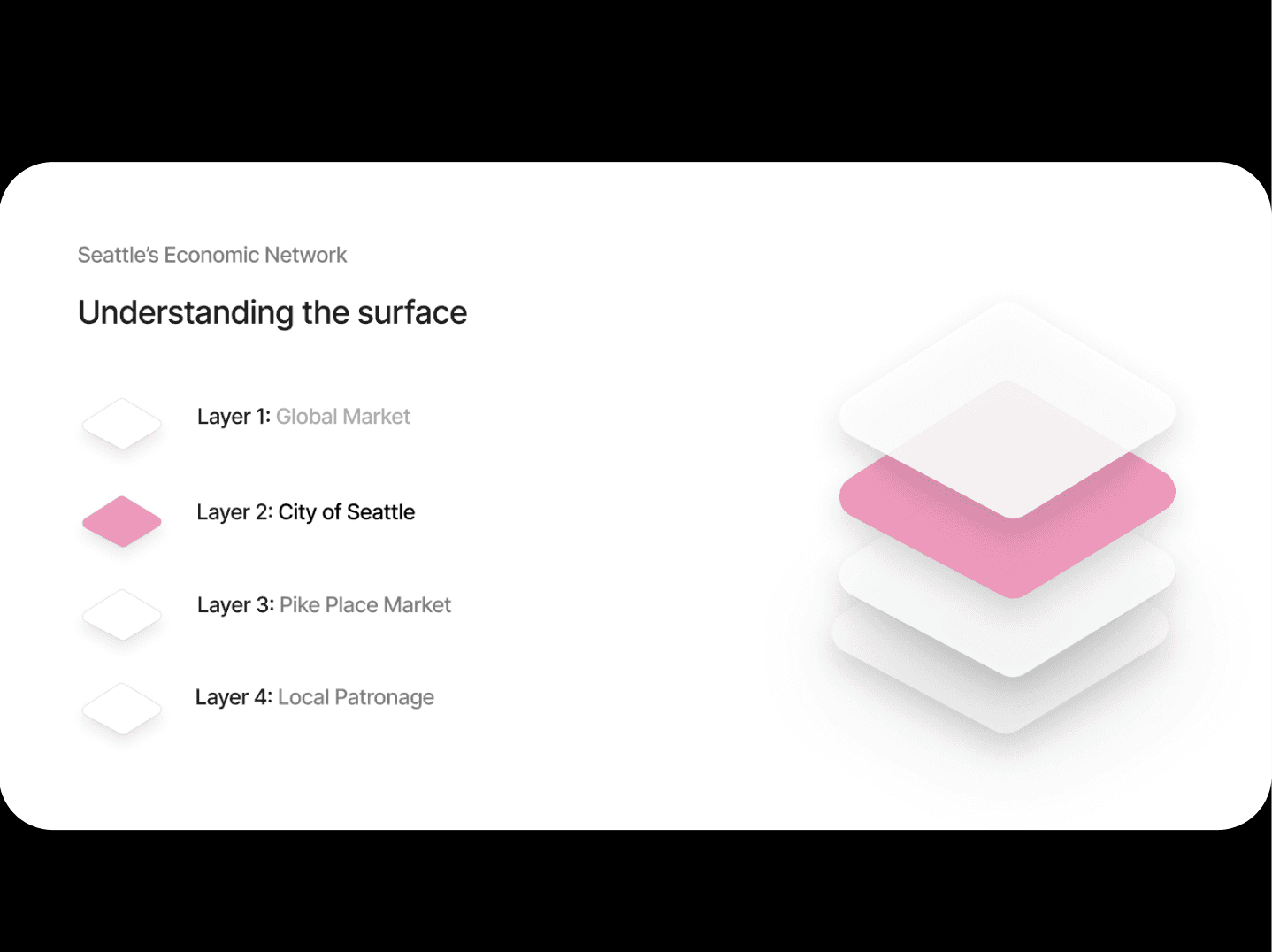
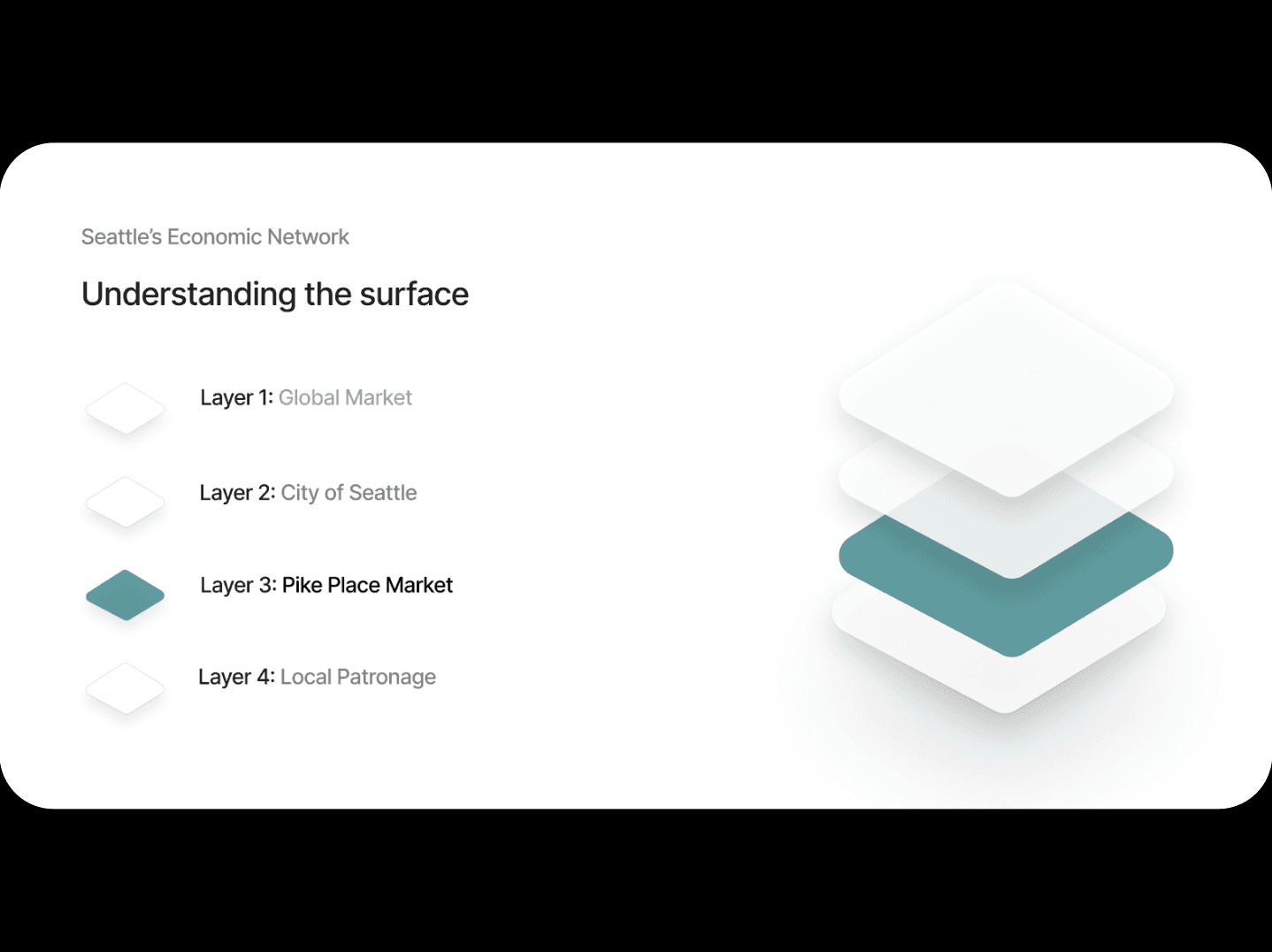
origin_lat,dest_long, etc.) so both datasets could be rendered seamlessly on a single Kepler.gl map.Interactive Architecture: The map was hosted on GitHub Pages. Rather than overwhelming users, the interface uses event-driven interactions to hide or reveal content, allowing for a structured and intentional user-centered discovery process
Results
The final product functions as a powerful storytelling tool that encourages self-discovery rather than passive consumption.
Validated Data: The workflow resulted in a confirmed dataset of 57 unique vessels across container, auto, and domestic services.
Deep Transparency: Users can hover over any node to see specific metadata—vessel names and cargo types for global routes, or farm types and primary products for local vendors.
Strategic Outcome: By visualizing the "centrality power" of Seattle as a hub, the project highlights the critical need for local investment in a time of increasing globalization, providing Pike Place Market with a digital asset to support their goal of increasing regional patronage.